
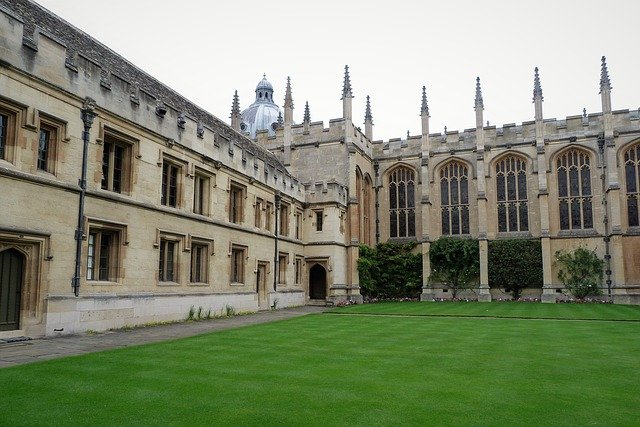
Islamabad is not just Pakistan’s capital. It quietly holds some of the most powerful universities this country has ever produced — institutions that have sent graduates to NASA, built Pakistan’s nuclear programmer, and placed engineers on projects across four continents. Yet every admissions season, thousands of students in Islamabad and Rawalpindi sit with their results and still have no clear picture of which university actually fits them. Here we will gives you best Islamabad universities.
Most students pick a university the wrong way.
They ask a cousin who graduated four years ago. They read a list someone copy-pasted from Wikipedia. They go with whatever name sounds most impressive at the dinner table. Then three semesters in, they realise the program does not suit them, the merit was wrong, or the degree does not open the doors they expected.
This guide exists because that pattern needs to stop.
Learnistiq spent time going through the actual numbers — research output, closing merits, fee structures, what graduates are doing, and one specific fact about each university that tends to change how people think about it. No padding. No recycled content. Just the information a student in Islamabad actually needs in 2025.
Learnistiq Honest Review
We Visited. We Researched.
Now We Are Telling You the Truth.
Every year thousands of students pick the wrong university — not because they are not smart, but because no one gave them an honest picture before they applied. This is that picture.

What does Learnistiq actually do that other websites do not?
Most university websites in Pakistan give you a ranked list and stop there. Learnistiq goes further — we match universities to students based on merit percentage, budget, city, and career field. We do not tell you which university is the best in Pakistan. We tell you which university is the best for you specifically — because those are two completely different answers and confusing them is exactly how students end up in the wrong place.
Quaid-i-Azam University
There is a specific type of student who ends up at QAU. They are not necessarily the loudest voice in the room or the one with the most polished CV. They are the ones who genuinely want to understand things — who find research exciting rather than exhausting. If that sounds like you, pay attention to this one. Established in 1967 as the University of Islamabad, QAU sprawls across a magnificent 1,700-acre campus nestled in the Margalla Hills — and that setting is not just scenery. There is something about being surrounded by those hills every day that actually shapes the culture of a place. QAU students tend to think differently from graduates of more commercially focused institutions. It shows in their research output. QAU has over 25,456 publications and 593,581 citations to its name. The Chemistry department ranks first in Pakistan and 756th globally, while Physics, Mathematics, and Pharmacy all feature in QS Subject Rankings in the 150 to 200 band.
Programs worth knowing about: Natural Sciences, Pharmacy, Biochemistry, Chemistry, Physics, Mathematics, International Relations, Defense Studies, and Social Sciences. The science departments here are genuinely world-class by Pakistani standards.
Fees: One of the most affordable top universities in the country. Undergraduate semester fees sit around Rs. 48,000 for regular sessions. A four-year degree costs between PKR 150,000 and 450,000 in total — less than some private universities charge per semester.
Merit: Minimum 60% in intermediate for most programs, with entry tests for specific departments. Competitive but not unreachable. The students here earned their place through academic ability, not through coaching academy tricks.
The thing most people overlook: Faculty members from Oxford, Cambridge, and Columbia teach here, and QAU maintains active research partnerships with the United Nations, the University of Tokyo, and the International Centre for Theoretical Physics. That level of international academic connection in a public Pakistani university is rarer than people realize.
Person who came from here: Dr. Atta-ur-Rahman — Pakistan’s most decorated living scientist, former HEC Chairman, and Fellow of the Royal Society — built a significant part of his academic legacy through institutions connected to QAU’s research culture. His work brought Pakistani chemistry research to international attention at a time when nobody expected it.
NUST University
NUST has a reputation that has been earned over three decades, not manufactured by a marketing department. When Pakistani students talk about which university produces graduates that actually get hired, NUST comes up first. When international employers look at Pakistani engineering candidates, NUST is the name they recognize. NUST is informally dubbed by locals as the Harvard of Pakistan — with an acceptance rate rivaling Ivy League universities, a campus spanning multiple faculties, and students from 33 different countries. That last point matters more than people think. Studying alongside international students changes how you approach problems — and employers can tell the difference. The university consistently ranks among the best globally, with several subjects in the top 200 in various university rankings. The quality of education is evidenced by an employer satisfaction survey putting NUST in the top 100 universities of the world. Top 100 globally for employer satisfaction. That is not a number you see attached to many institutions in South Asia.
Programs worth knowing about: Engineering across all disciplines, Computer Science, Business Studies, Architecture, Law, Health Sciences, Biomedical Sciences, and Social Sciences. The breadth here is genuine — this is not a narrow technical school anymore.
Fees: PKR 150,000 to 250,000 per semester for undergraduate programs. Not cheap, but NUST offers need-based and merit scholarships, and their financial aid process is worth exploring before you write off the cost.
Merit: The NET test is mandatory — conducted multiple times a year. Your final aggregate combines Matric, FSc, and NET scores. Computer Science and Electrical Engineering close at very high aggregates. Start NET preparation at least six months early and treat it seriously.
The thing most people overlook: NUST actively partners with 250 institutions and research organizations across 50 countries, and its campus includes a National Science and Technology Park where student startups receive real funding and mentorship. A university where you can launch a company while finishing your degree is a fundamentally different experience from a university where you just attend lectures.
Person who came from here: Dr. Sarah Qureshi — aerospace engineer, Tamgha-i-Imtiaz recipient, and founder of Aero Engine Craft — developed aeropropulsion technology at NUST that earned her recognition as one of the most significant scientific voices Pakistan has produced in a generation. She did not just study here. She started building her work here.
PIEAS — The Smallest University With the Biggest Doors
Most students have heard of PIEAS. Few actually understand what studying there means for your career. That gap in understanding is why every year, students who would have thrived there end up somewhere else instead. PIEAS is deliberately small. Enrollment sits at approximately 3,900 students total — 2,600 undergraduate, 800 postgraduate, and 500 doctoral. That is not a limitation. That is the whole point. The low student-to-teacher ratio allows for genuine mentorship and close guidance from faculty members who are experts in their specific fields. When you are one of 3,900 rather than one of 30,000, the faculty actually knows your name. The institution began as a training center for Pakistan’s Atomic Energy Commission and has never stopped being connected to the most specialized technical work happening in this country. Research at PIEAS spans nuclear medical treatments, materials science, and power generation innovation — areas that simply do not exist as academic pathways at most other Pakistani universities.
Programs worth knowing about: Nuclear Engineering, Electrical Engineering, Mechanical Engineering, Computer Science, Physics, and Mathematics. The range is deliberately narrow. That is not a weakness — it is what gives every department here an unusual depth.
Fees: Rs. 62,500 per semester. The most affordable top-tier university in Islamabad by a significant margin. For the doors a PIEAS degree opens, that fee structure is almost difficult to believe.
Merit: Entry test required with a minimum 60% in FSc Pre-Engineering. The minimum is not the reality — closing merits here are high because the seats are few and the demand is genuine. Prepare seriously for the entry test.
The thing most people overlook: PIEAS graduates do not just work at companies. They work on Pakistan’s most sensitive and significant technical programmers — positions that are never advertised publicly and never appear on job boards. The career pathway here goes somewhere most university degrees simply cannot reach.
Person who came from here: Dr. Abdul Qadeer Khan — the engineer and metallurgist who built Pakistan’s nuclear capability — is the most consequential scientific figure in the country’s modern history. His connection to PIEAS is not just historical trivia. It defines what this institution stands for and who it produces.
COMSATS University Islamabad — The CS Powerhouse Nobody Argues With
If Computer Science is your field and someone tells you COMSATS is not one of the best options in Islamabad, they are either uninformed or have not looked at the actual data recently. COMSATS is ranked best in Islamabad for Computer Science — not best among private universities, not best among mid-tier institutions. Best in the city. Full stop. COMSATS is also the first exclusively technology-focused university established in Pakistan, which means its entire institutional identity was built around the fields that are most valuable in today’s job market. The campus in Islamabad is large, modern, and genuinely well-equipped. But what matters more than campus aesthetics is the research output — and COMSATS has been climbing consistently. In the CWTS Leiden Rankings of October 2025, COMSATS ranked highest among Pakistani universities — a pure research quality index with no room for institutional politics or reputation inflation.
Programs worth knowing about: Computer Science, Artificial Intelligence, Data Science, Cybersecurity, Software Engineering, Electrical Engineering, Civil Engineering, Mechanical Engineering, Business Administration, Bioinformatics, and Architecture.
Fees: PKR 130,000 to 150,000 per semester for undergraduate programs. Reasonable for the quality and recognition attached to the degree.
Merit: NTS NAT score required for undergraduate admissions. CS and Engineering programs at the Islamabad campus close above 85 to 87 percent aggregate in competitive years. If your aggregate is slightly below that, the Wah or Attock campus offers the same degree with more realistic closing merits.
The thing most people overlook: COMSATS has Pakistan’s first Student Startup Business Centre on campus. The connection between academic CS education and actual industry application here is more direct than at most Pakistani institutions — and it shows in where the graduates end up.
Person who came from here: The founding engineers and CTOs of several of Pakistan’s most successful technology companies — including firms that have attracted international venture capital investment — began at COMSATS campuses. Pakistan’s technology sector has COMSATS fingerprints all through it.
FAST-NUCES Islamabad — Where Pakistan’s Tech Industry Comes to Hire
Every major technology company that recruits in Pakistan shows up at FAST campuses. That single fact tells you more about this university than any ranking ever could. FAST is demanding. The workload in first year genuinely surprises students who thought they were prepared. The dropout pressure is real and not something the university tries to hide. But the students who make it through graduate with something that is difficult to manufacture — the ability to work under pressure, think precisely, and deliver. The industry knows it. That is why they keep coming back. FAST-NUCES is widely regarded as the best university for Computer Science in Pakistan — and that status has been consistent across multiple ranking systems and employer surveys for years running. It is not reputation inertia. It is the actual graduate outcomes backing it up.
Programs worth knowing about: Computer Science, Software Engineering, Electrical Engineering, Business Administration, Data Science, Artificial Intelligence, and Cybersecurity.
Fees: Annual fees run between PKR 250,000 and 350,000 depending on the program. Merit scholarships are available for top performers and the financial aid office is accessible.
Merit: Admission is through the NU Test — FAST’s own entrance exam. The Islamabad campus has some of the highest closing merits among private CS institutions in the country. The test covers mathematics, English, and analytical reasoning. Preparation matters enormously.
The thing most people overlook: The alumni network at FAST inside Pakistan’s technology sector is one of the most active and genuinely useful of any university in the country. FAST graduates hire other FAST graduates — not out of nepotism, but because they know what that degree represents in terms of actual capability.
Person who came from here: Multiple founders of Pakistan’s most prominent technology startups — including companies that have raised Series A funding internationally — are FAST alumni. The startup ecosystem in Islamabad traces a significant portion of its founding talent back to this campus.
Air University — For Students Who not Know Exactly What They Want
Air University is not the right choice for everyone. It is the right choice for a specific kind of student — one who is serious about aerospace, defence technology, or cybersecurity, and who understands that those fields have pipelines that most civilian universities simply cannot access.
Backed by the Pakistan Air Force, Air University stands out for its focus on aerospace, cybersecurity, and management sciences. The PAF connection that sometimes makes students hesitant is actually what gives this university access to specialized labs, classified research programmers, and a professional network that extends directly into Pakistan’s aviation and defense establishment.
Programs worth knowing about: Aerospace Engineering, Avionics, Electrical Engineering, Computer Science, Cybersecurity, Business Administration, and Management Sciences.
Fees: Moderate — roughly PKR 100,000 to 180,000 per semester depending on the program. Merit-based scholarships available.
Merit: Competitive entry test alongside FSc results. Aerospace Engineering has among the tightest seats on campus given the specialized nature of the program.
The thing most people overlook: The internship opportunities available through PAF connections go places that standard university placement offices cannot reach. Students in Aerospace and Avionics programmer gain access to real aircraft systems and active operational environments during their degree — an experience that simply does not exist in civilian institutions.
Person who came from here: Senior engineers and technical officers who transitioned from Pakistan Air Force service into civilian technology leadership — including in SUPARCO and Pakistan’s commercial aviation sector — have maintained deep connections to Air University’s academic programmers, giving graduates a professional community with genuine substance behind it.
Conclusion by Learnistiq Team:
QAU is for the student who wants to spend four years inside serious research and come out knowing how to think. NUST is for the student who wants global employer recognition and the best general engineering and technology education in the capital. PIEAS is for the student who is prepared to work harder than almost anyone else in Pakistan for access to opportunities that almost no one else will ever have. COMSATS is for the CS and engineering student who wants strong research output, good industry connections, and reasonable fees. FAST is for the student who genuinely loves computer science and is ready to be pushed until that love either deepens or breaks. IIUI is for the student whose ambitions cross borders and whose values are rooted in a tradition that deserves serious academic treatment. And Air University is for the student who already knows they want aerospace, defence, or cybersecurity — and is ready to train for it in the most direct way possible.
Can you trust university rankings when choosing where to apply?
Partially — and that partial trust is the dangerous part. Rankings measure research output, citation counts, international faculty ratios, and employer surveys. They do not measure whether the teaching in your specific department is actually good. They do not tell you what the closing merit was last year or whether the hostel is safe or whether graduates in your field found work within six months of finishing. Rankings are a starting point, not a conclusion. Use them to build your shortlist — then go deeper before you decide.
I got decent marks but not outstanding ones — does that mean the good universities are already out of reach?
Not even close. The mistake most students make is looking at the highest closing merit from last year and assuming that is the only number that matters. Merit varies by program, by campus, and by year. A student with 72% who wants Civil Engineering at COMSATS has a realistic shot. A student with the same marks chasing CS at NUST does not — but that does not mean NUST is finished as an option either, because other programs there close lower. The key is matching your actual aggregate to the right program inside the right university — not writing off entire institutions because one department was out of reach.
-
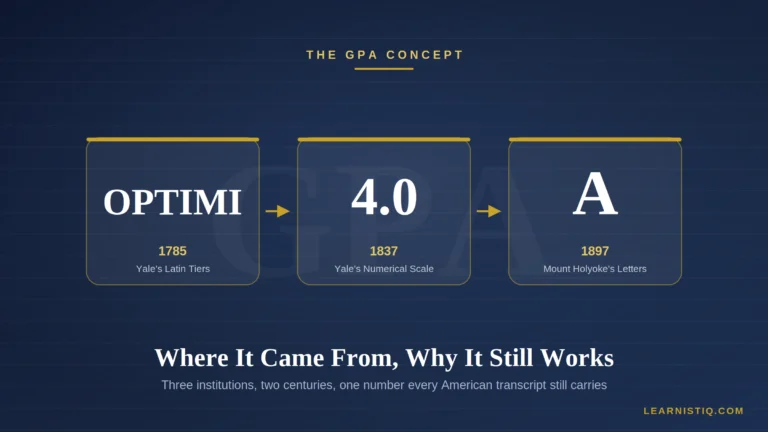
The GPA Concept: Where It Came From and Why It Still Works This Way
A high school senior named Marcus once asked his guidance counselor a question that stopped her mid-sentence: “Who actually invented the GPA?” She had answered thousands of questions about scholarship cutoffs and weighted scales over eighteen years on the job. Nobody had ever asked her where the number came from in the first place. She … Read more
-
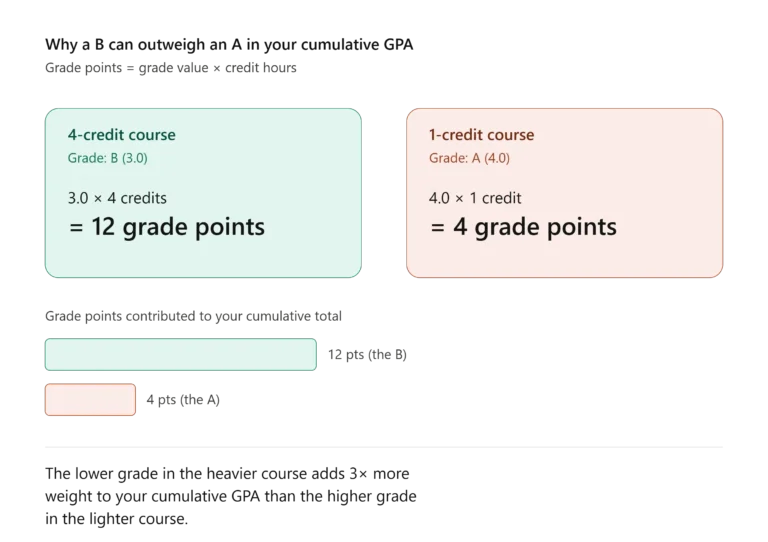
Cumulative GPA: The Quiet Number That Decides Scholarships, Probation, and Admissions
Sarah found out she’d lost her scholarship in an email that took four lines to say it. Not a phone call. Not a meeting with her advisor. Four lines, sent on a Tuesday afternoon in March, informing her that her cumulative GPA had landed at 2.94 — six hundredths of a point under the 3.0 … Read more
-
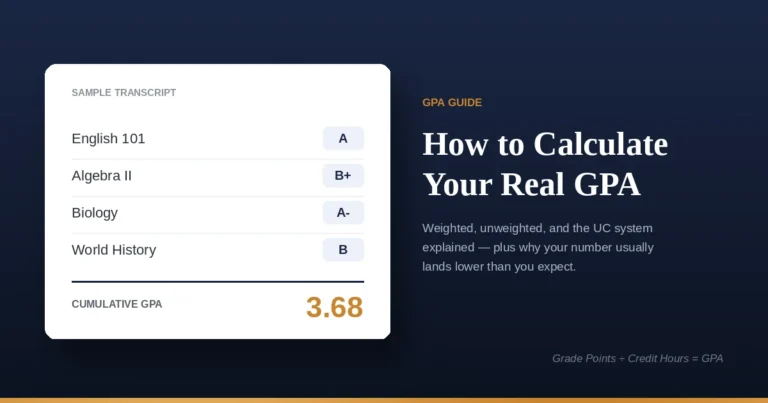
How to Calculate Your GPA (And Why It’s Lower Than You Think It Should Be)
I’ve looked at more transcripts than I can count, and the same conversation happens almost every time. A student does quick mental math and lands on a number that doesn’t match their report card, then asks the question nobody says out loud at first: “Why is my GPA lower than I thought it’d be?” That … Read more

Every article on Learnistiq is written by Shahzaib Khan — an education
researcher who has spent years studying university admissions,
scholarship systems, and online education across Pakistan, the USA,
the UK, and Germany.
Shahzaib started Learnistiq because he saw students making expensive
mistakes — choosing the wrong university, missing scholarship deadlines,
or believing myths about online degrees. This platform exists to fix that.
No AI-generated filler. No copy-paste from official university websites.
Every guide is researched, fact-checked, and written to actually help
you make a better decision.