

Every year thousands of students pick the wrong universities in Karachi — no practical, no real experience, four years wasted. Learnistiq researched every university so you can check development history, programs, fees, admission process and last 5 years record before you apply.
Check Everything Before You Apply
Every year in Karachi, a large number of students complete their degrees and walk out feeling cheated. Not because they were lazy. Not because the syllabus was difficult. But because nobody told them — before they applied — what that university actually delivers in practice. Whether the labs are functional or just listed on a website. Whether industry actually comes to recruit there or the placement cell is just a room with a locked door. Whether the fee they were quoted in first year is the same one they will be paying in third year.
Learnistiq was built for exactly this gap. We went into each university — its founding history, how it has developed over time, what programs it actually runs, what the fees look like honestly, how the admission process works, what merit is realistically needed, and what the last five years of performance data actually shows. Not what the university says about itself. What the numbers say.

Here are the five that matter most in Karachi.
For other Countries visit our page.
University of Karachi — The Most Underestimated Institution in the City
Nobody talks about KU the way the data says they should.
It started in 1951 with two faculties and fifty students on a campus that was little more than an idea. Today that campus covers 1,279 acres, houses six faculties, over 52 departments, and 19 research institutes and centers serving more than 24,000 students. That growth is not just size — it represents seven decades of institutional knowledge building up in departments that quietly became serious research environments while everyone was busy talking about newer, shinier institutions. The research numbers are not what most people expect. KU carries 19,588 academic publications and 238,312 citations in Edu Rank’s index — placing it 7th in Pakistan and 2,371st globally in the 2026 ranking, with performance in the top 50% across 98 research topics. Total citations by KU’s prominent scientists reach 109,324, with a mean of 15,618 citations per researcher. These are not numbers that belong to a backup option. They belong to a university doing genuine academic work across a wide range of disciplines. KU is ranked best in Karachi for Medicine and Health in Pharmacy and Pharmacology, and best in Karachi for Natural Sciences in Chemistry. If either of those fields is where you are headed, the strongest academic environment for that subject in the entire city is here at a public university fee.
Programs: Sciences, Arts, Law, Pharmacy, Chemistry, Biochemistry, Botany, Zoology, Environmental Sciences, Islamic Studies, Commerce, Mass Communication, Social Sciences, and Marine Sciences. The range exists because the university was built to serve the breadth of a city, not a narrow demographic.
Fees: PKR 15,000 to 40,000 per semester depending on program. Evening programs are slightly higher. For a university with this research output, these numbers represent the best value proposition in Karachi higher education.
Admission process and merit: Department-specific entry tests for most programs. Science programs lean heavily on FSc marks. Pharmacy and Chemistry close at 70 percent and above in competitive years. The admission office at the Silver Jubilee Gate runs an open-house system before admissions — worth attending in person if you are seriously considering applying.
Last 5 years: 108 separate university rankings combined place KU first in Karachi in the composite meta-ranking. The trajectory is consistently upward. This is not the same institution it was a decade ago.
What Learnistiq found: The practical exposure here depends entirely on which department you enter. The Science labs are active and properly equipped. The research centers are running real work. But in Commerce and some Social Sciences departments, the industry linkage is weak — graduates in those fields need to build their own professional network rather than rely on the university to do it for them. Knowing this before you apply is the difference between a plan and a disappointment.
Aga Khan University — Where the Standard Is Set and Then Held
AKU does not compete with other medical universities in Karachi. It operates in a different category — and the gap between that category and everything else is measurable, not just perceived.
It was founded in 1983 as Pakistan’s first private university. Today its international reach extends to Kenya, Tanzania, Uganda, the United Kingdom, and Afghanistan. That expansion happened because the academic model worked well enough in Karachi to be worth replicating across four continents. Most Pakistani universities struggle to maintain quality at one campus. AKU maintained it while building seven. AKU ranked 3rd in Pakistan and 1,742nd globally in 2025, scoring in the top 50 percent across 85 research topics. In Biotechnology specifically, it is the 3rd ranked institution in Pakistan with 1,523 publications and 12,031 citations. For a university that most people think of as purely clinical, the depth of research activity across health sciences is consistently surprising.
Programs: MBBS, BDS, Nursing, Midwifery, Public Health, and Education — from undergraduate through doctoral level. Each program runs alongside the teaching hospital system, which means clinical and classroom learning are integrated rather than sequential.
Fees: Among the highest of any institution in Pakistan. This is a fact, not a criticism. The financial aid program is genuine and under-applied — most students who need it never submit the separate application because they assume the answer is no. It frequently is not.
Admission process and merit: AKU’s own admission test evaluates reasoning and clinical thinking, not rote recall. An FSc aggregate above 85 percent is effectively the baseline for competitive applicants. The test itself requires preparation that is different in character from MDCAT preparation — start early and start differently.
Last 5 years: Consistently upward across every credible metric. Research output growing. International collaborations deepening. Clinical programme expanding. No regression in any measurable category over the past five years.
What Learnistiq found: The single biggest advantage at AKU that no article properly explains is the timing of clinical exposure. Students are inside the hospital environment from early in their training — not from third year, not from clinical attachment in fourth year. From early. The doctors this produces think differently under pressure than graduates whose clinical exposure came late. The NHS knows this. Gulf hospitals know this. That is why AKU graduates are preferred internationally in ways that are structural rather than just reputational.
NED University of Engineering & Technology
There is a specific reason NED graduates dominate Karachi’s construction, energy, and industrial sectors. It is not networking. It is not branding. It is a hundred years of the same institution producing engineers who can actually do the work. NED was founded as Prince of Wales Engineering College in 1921. It was built to train engineers for a growing industrial city. That original purpose has never changed — and a university that has been doing one thing consistently for a century develops a depth in that thing that newer institutions cannot manufacture. In 2023, NED entered the QS World University Rankings at position 801 — joining a group of seven Pakistani universities with genuine global ranking presence. In Karachi specifically, NED holds the top ranking for Engineering across all institutions in the city.
Programs: Civil, Electrical, Mechanical, Chemical, Computer, Petroleum, Biomedical, Industrial and Environmental Engineering, and Architecture. BS through PhD. The department range reflects what a city like Karachi actually needs from its engineers.
Fees: PKR 60,000 to 80,000 per semester. Computer Science runs slightly higher. In a field where private engineering colleges charge three to four times this amount for equivalent or lesser programmes, the fee structure is one of the most defensible arguments for public engineering education in Pakistan.
Admission process and merit: NED’s own entry test. Aggregate combines Matric at 25 percent, FSc at 45 percent, and entry test at 30 percent. Minimum 60 percent in FSc Pre-Engineering just to apply. Computer Science and Electrical Engineering close at significantly higher aggregates — plan around those numbers, not around the minimum.
Last 5 years: Research output has grown noticeably. International academic collaborations have expanded. The institution that was historically focused almost entirely on teaching has begun building a genuine research identity — and the ranking movement reflects that shift.
What Learnistiq found: NED’s practical advantage is structural rather than programmatic. Companies in Karachi’s construction, manufacturing, and energy sectors hire NED graduates not because NED tells them to, but because NED graduates have been delivering in those sectors for generations. The internship pipelines, the project site placements, the early industry exposure — these exist because the relationship between NED and Karachi’s engineering industry is old enough to be institutional. You do not build that in five years.
Institute of Business Administration — Where Pakistan’s Corporate World Was Assembled
IBA has been producing the people who run Pakistan’s banks, corporations, and financial institutions for seventy years. That is not reputation. That is a documented employment record stretching across seven decades of graduates.
IBA was established in 1955 with technical support from the Wharton School of Finance and the University of Southern California. The academic standards inherited from those institutions were never lowered as IBA grew. That is an unusual institutional achievement in any country. In Pakistan it is rare enough to be worth noting every time. IBA ranks 301st globally in QS Subject Rankings for Business and Management Studies. Top 300 business schools on the planet. In a country where most institutions do not appear in global subject rankings at all, that number carries real weight. IBA is also the first university in Pakistan to hold CFA University Partner status granted by the CFA Institute in the United States — a partnership that changes the practical architecture of what an IBA finance degree means to employers in banking and investment.
Programs: BBA, BS Accounting and Finance, BS Economics, BS Computer Science, BS Social Sciences, MBA, MS Data Sciences, and doctoral programmes in Economics and Computer Science.
Fees: PKR 200,000 to 350,000 per semester. This is expensive relative to public institutions. The financial aid office is accessible and the need-based support is real — but competition for it is high. Apply early and apply with full documentation.
Admission process and merit: IBA Entry Test plus SAT or ACT plus Interview. Three stages. The interview is not a formality — it evaluates communication, reasoning, and how you think under pressure. Preparation for the interview should begin the same time as preparation for the test.
Last 5 years: Research output has grown. The doctoral program have become more active. Industry partnerships have expanded internationally. The corporate placement record has remained consistent. No decline in any category over the past five years.
What Learnistiq found: The IBA alumni network is the most activated of any university in Karachi. IBA graduates at senior levels inside companies actively participate in recruiting other IBA graduates — not because the university asks them to, but because seventy years of institutional trust has built a belief that an IBA degree indicates a specific kind of capability under pressure. That trust translates directly into employment outcomes for current students in ways that cannot be replicated by a newer institution regardless of its facilities.
Dow University of Health Sciences
The Medical Institution That Actually Trains Doctors for the Real World
Dow does not have AKU’s international profile. It does not need it to do what it does — which is produce large numbers of practically capable doctors at a price that does not require a family to liquidate their savings. Dow Medical College was founded in 1945 — two years before Pakistan existed. It became Dow University of Health Sciences in 2004 when the government granted it full university status. Eighty years of medical education in one institution, through partition, through multiple healthcare crises, through decades of Karachi’s particular urban complexity. The institution that survived all of that and kept producing doctors is not fragile. Dow ranks first in Karachi in University Guru’s composite meta-ranking built from 108 separate university rankings. That composite number is significant precisely because it is not one ranking with one methodology that can be gamed. It is 108 independent assessments averaged — and Dow comes out on top of all institutions in the city.
Programs: MBBS, BDS, Pharm-D, BS Nursing, BS Physical Therapy, BS Medical Imaging Technology, and BS Health Information Management. Postgraduate specialization’s across all major clinical departments.
Fees: PKR 100,000 to 150,000 per year for MBBS. Private medical colleges in Karachi charge PKR 1,000,000 and above for the same degree. That gap — seven to ten times — is real and it matters to most Pakistani families in a way that cannot be wished away.
Admission process and merit: MDCAT score combined with FSc marks determines aggregate. Closing merit in competitive years goes above 85 percent. MDCAT preparation needs to be structured and sustained — the test is not something you can prepare for in three weeks.
Last 5 years: Consistent upward movement across research output, especially in public health and clinical medicine. International journal publications have increased noticeably. The hospital affiliation network has grown. The institution is not standing still.
What Learnistiq found: The real advantage at Dow is case volume — and it is something no article bothers to quantify properly. Karachi’s hospital network that Dow students train in is one of the highest-volume clinical environments in South Asia. The diversity and volume of cases a Dow student encounters during clinical years builds practical diagnostic ability that medical schools in smaller cities or smaller hospitals simply cannot match. NHS recruiters, Gulf hospital systems, and North American medical licensing bodies recognise what that exposure produces. Dow graduates are not doing well internationally by accident. They are doing well because they were trained under conditions that prepared them for exactly that level of clinical demand.
Conclusion
Every student reading this is about to make a decision that will shape the next four years of their life and the decade after that. Most students in Karachi make that decision based on incomplete information — what a relative said, what a ranking number looked like, what a university’s social media feed showed them.
Learnistiq exists because that is not good enough.
We researched every university in this list — its founding, its development history, its programs, its real fees, its actual admission process, what merit realistically gets you in, and what the last five years of performance data actually shows. Not what the university wants you to believe. What the evidence says.
Check everything before you apply. That is not cautious advice. It is the only way to make a decision you will not regret three semesters from now.
Which university in Karachi is best for medical students — AKU or Dow?
This question gets asked every single admissions season, and the honest answer is that it depends on one thing your family probably does not want to openly discuss — money. AKU is the stronger institution by every academic and research metric. The clinical training starts earlier, the faculty credentials are internationally verified, and the degree is understood by hospitals in the UK, the Gulf, and North America in a way that opens specific doors. But the fees are among the highest of any institution in Pakistan. Dow, on the other hand, ranks first in Karachi across 108 composite university rankings, runs genuine clinical training through a high-volume hospital network, and charges a fraction of what AKU costs. Dow graduates are practising successfully across four continents. The question is not which university is better in the abstract. The question is which one your family can sustain for five years without the financial pressure becoming part of your medical education.
Can a student from outside Karachi study at these universities and find affordable accommodation?
This is the question families outside Karachi ask and almost no university guide answers properly. The short version is yes — but with conditions. KU, NED, and Dow all have hostel facilities with limited seats that are allocated on merit and need. Applications for hostel accommodation are separate from admission applications and need to be submitted early. For IBA and AKU, hostel availability is better structured and more formally managed, but costs more. For students who do not secure hostel, Karachi has a well-established student housing market in areas near the major universities — Defence, Gulshan, North Nazimabad — where shared accommodation is available at reasonable rates. Living costs in Karachi are lower than in most major Pakistani cities. A student who plans accommodation as seriously as they plan admission will find the city manageable. The ones who arrive without a plan find it difficult.
-
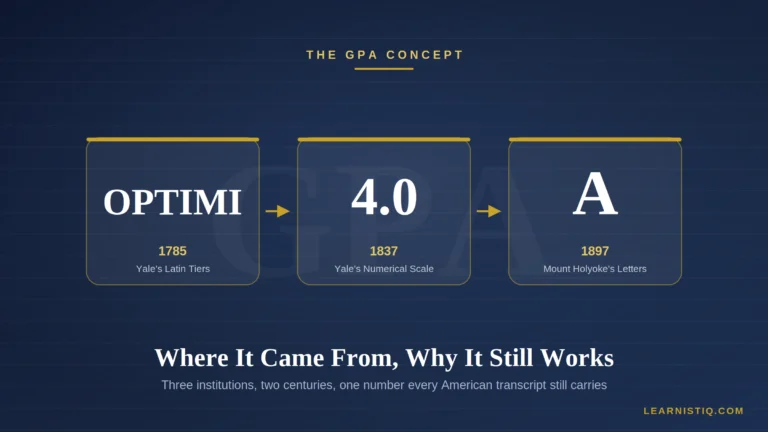
The GPA Concept: Where It Came From and Why It Still Works This Way
A high school senior named Marcus once asked his guidance counselor a question that stopped her mid-sentence: “Who actually invented the GPA?” She had answered thousands of questions about scholarship cutoffs and weighted scales over eighteen years on the job. Nobody had ever asked her where the number came from in the first place. She … Read more
-
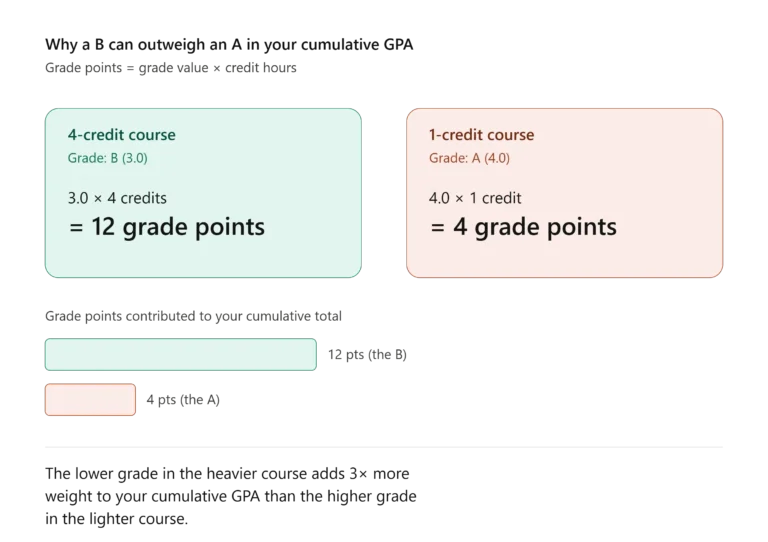
Cumulative GPA: The Quiet Number That Decides Scholarships, Probation, and Admissions
Sarah found out she’d lost her scholarship in an email that took four lines to say it. Not a phone call. Not a meeting with her advisor. Four lines, sent on a Tuesday afternoon in March, informing her that her cumulative GPA had landed at 2.94 — six hundredths of a point under the 3.0 … Read more
-
How to Calculate Your GPA (And Why It’s Lower Than You Think It Should Be)
I’ve looked at more transcripts than I can count, and the same conversation happens almost every time. A student does quick mental math and lands on a number that doesn’t match their report card, then asks the question nobody says out loud at first: “Why is my GPA lower than I thought it’d be?” That … Read more


Every article on Learnistiq is written by Shahzaib Khan — an education
researcher who has spent years studying university admissions,
scholarship systems, and online education across Pakistan, the USA,
the UK, and Germany.
Shahzaib started Learnistiq because he saw students making expensive
mistakes — choosing the wrong university, missing scholarship deadlines,
or believing myths about online degrees. This platform exists to fix that.
No AI-generated filler. No copy-paste from official university websites.
Every guide is researched, fact-checked, and written to actually help
you make a better decision.