
By Prof. Editorial Team, Learnistiq.com
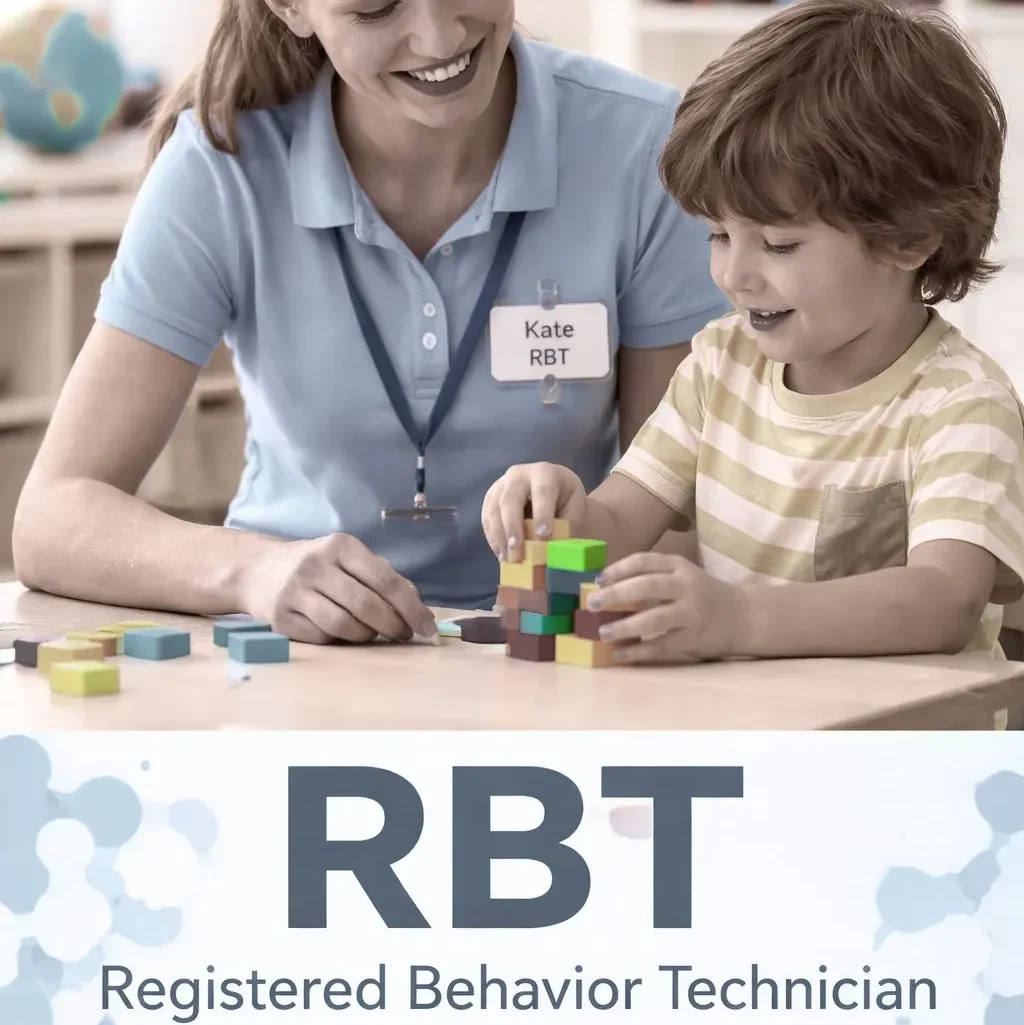
An Registered Behavior Technician (RBT) is not just a paraprofessional. An RBT is the front line of Applied Behavior Analysis the human being who sits beside the child, reads the room, implements the plan, and builds the relationship that makes all of the science actually work.
subject material
- 1 What Does an RBT Actually Do All Day?
- 2 Who Should Become an RBT?
- 3 How to Become a Registered Behavior Technician in 2026:
- 4 The 40-Hour Training — What Nobody Tells You
- 5 The RBT Exam Decoded: Format, Strategy, and 2026 Changes
- 6 RBT vs. BCBA vs. BCaBA — Understanding Your Career Ladder
- 7 Where Do RBTs Work? Every Setting Explained
- 8 Career Growth: Your Roadmap from RBT to BCBA
- 9 Final Word: Is the RBT Worth It in 2026?
What Is a Registered Behavior Technician (RBT) :
Let us start with the definition you will not find in a glossary, because the dry, official version tells you what an RBT is on paper, but it does not tell you what an RBT means to a six-year-old child who just spoke their first full sentence after three months of therapy.
Officially, the Registered Behavior Technician (RBT) is a paraprofessional certification administered by the Behavior Analyst Certification Board (BACB). RBTs deliver Applied Behavior Analysis (ABA) therapy under the direct supervision of a Board Certified Behavior Analyst (BCBA) or a Board Certified Assistant Behavior Analyst (BCaBA).
But what does that actually mean in practice? It means you are the person in the room. The BCBA designs the therapy plan — assesses the child, determines what goals to target, builds the entire clinical program. Your job as an RBT is to execute that plan with skill, consistency, and genuine human care, session after session, week after week.
| KEY INSIGHT : The BACB introduced the RBT credential in 2014 to standardize training and ensure quality control at the direct-care level of ABA services. Before RBT certification existed, anyone could call themselves a behavior technician with no verified training whatsoever. |
What Does an RBT Actually Do All Day?
Most job descriptions make this role sound clinical and distant. They list bullet points about data collection and behavior reduction protocols. That is all accurate, but it misses the texture of what this job actually feels like from the inside.
Here is an honest reconstruction of a typical RBT workday:
Before the Session Begins
- Review the client’s current program goals and any notes from the previous session
- Prepare materials — flashcards, preferred items, reinforcers, data sheets or digital tablet
- Communicate with the supervising BCBA about any planned adjustments to the session
- Review behavior intervention plans for clients with challenging behavior histories
During the Session
- Implement skill acquisition programs: teaching communication, daily living skills, academic readiness, and social interaction
- Run behavior reduction protocols: applying planned interventions when target behaviors occur
- Conduct preference assessments to identify what motivates your client on that particular day
- Use Discrete Trial Training (DTT) for structured teaching moments
- Use Natural Environment Teaching (NET) to embed learning in play and everyday activities
- Collect data on every target behavior and every skill trial — this data drives all future clinical decisions
- Maintain safety — for yourself, your client, and anyone present
After the Session
- Complete detailed session notes documenting what occurred, what data was collected, and any notable observations
- Communicate observations to the supervising BCBA, especially regarding unexpected behavior patterns or client progress
- Document your supervision hours and flag any questions for your next supervision meeting
💡 PROFESSOR’S NOTE
Here is something important that many career guides skip: the most critical skill an RBT develops is not data collection or DTT procedures — it is relationship-building. The technical skills can be taught in 40 hours. The ability to pair yourself as a reinforcing presence and genuinely connect with a client who may struggle to communicate — that takes heart, patience, and months of practice.
Who Should Become an RBT?
I will be direct with you here, because too many guides tell prospective RBTs only what they want to hear. This is a rewarding career, but it is not for everyone. Knowing whether it fits you before you invest time and money is the honest place to start.
You Are Probably a Strong Fit If…
You are genuinely patient — not just mildly patient: You will have sessions where a client cries for 40 minutes, and your job is to remain calm, consistent, and therapeutic throughout all of them
*You can handle physical and emotional intensity: Some clients engage in aggression, self-injury, or property destruction. You will need the training and the temperament to respond safely and therapeutically
You are detail-oriented and data-driven: Accurate data collection is not optional in ABA. A session with missing or inaccurate data is a session that cannot be used to make clinical decisions.
You want a career launchpad, not just a job: The RBT is the single most accessible entry point into a field where full analyst (BCBA) salaries routinely exceed $80,000–$100,000.
You May Struggle If…
| You have difficulty separating emotionally from work: This work is intense. Without strong emotional boundaries and self-care practices, burnout is a serious risk — the annual RBT turnover rate hovers around one-third of the workforce. | You need significant autonomy at work: The supervised model is not going to change. If constant oversight feels stifling rather than supportive, the RBT role will frustrate you. |
| 317,699+ BACB Certificants Worldwide (2025) | 12–22% Projected Job Growth (10-Year) | $47K–$54K Average Annual RBT Salary (USA) | 40 Hours Training Required to Start |
How to Become a Registered Behavior Technician in 2026:
The path to RBT certification is refreshingly straightforward compared to most healthcare credentials. You do not need a college degree. You do not need prior clinical experience. What you need is a clear plan and the discipline to follow it.
01 :Meet the Basic Eligibility Requirements
You must be at least 18 years old and hold a high school diploma, GED, or its equivalent. You must also pass a criminal background check comparable to those required for home health aides, childcare workers, and teachers in your community.
02 :Find a Supervising BCBA Before You Begin Training
This step surprises most people. Securing a supervisor before you start training streamlines everything. Many employers hire RBT candidates and sponsor them through training — meaning you can earn while you learn from day one. If you apply without a supervisor lined up, your certification remains inactive even after you pass the exam.
03: Complete the 2026-Compliant 40-Hour RBT Training
Enroll in a BACB-compliant training program aligned with the updated 2026 RBT Curriculum Outline. Training must be delivered by an active BCBA or BCaBA, and your training certificate must include the specific 2026 compliance statement required by the BACB. Pre-2026 training certificates will NOT be accepted for applications submitted after December 31, 2025.
04 :Pass the RBT Initial Competency Assessment
Your supervising BCBA or BCaBA observes you directly demonstrating each skill on the RBT competency checklist. This is a hands-on, observed performance evaluation — not a written quiz. Practice the skills beforehand; your supervisor will typically provide coaching and guidance on expectations.
05 :Submit Your BACB Certification Application
Create your BACB account at bacb.com and complete the streamlined single-session application. Your supervising BCBA submits an Attestation Form confirming your eligibility. This new process is significantly simpler than the multi-step procedure that existed before 2026.
06 :Pass the RBT Certification Exam
Schedule your exam through Pearson VUE — either at a testing center or via remote proctoring. The exam contains 85 multiple-choice questions based on the 3rd Edition Test Content Outline. You have 90 minutes. Once you pass, your supervisor must officially add you as an active supervisee in their BACB account before you can begin providing services.
⚠️ IMPORTANT
2026 Critical Change: If your RBT application was approved before January 1, 2026, that approval remains valid for a 12-month window. However, if it expires without you completing the exam, you must start over under the new requirements — including the updated 40-hour training. Plan your timeline carefully.
The 40-Hour Training — What Nobody Tells You
The 40-hour RBT training is described in most guides as a curriculum covering six content areas. That is correct, but it understates how much intellectual ground those six areas actually cover. Let me walk you through each domain the way I would explain it to a first-year student.
Measurement
This domain covers frequency, duration, latency, inter-response time, and the difference between continuous and discontinuous recording systems. It also covers graphing and basic data interpretation. Most students underestimate this section — it is not just counting behaviors. It is understanding which measurement system to use, when to use it, and what the resulting data actually tells you about a client’s trajectory. Every clinical decision in ABA is downstream of data. If you collect it wrong, the whole system fails.
Skill Acquisition
This is the core of teaching — the mechanism by which clients grow. You will learn Discrete Trial Training, Natural Environment Teaching, shaping, chaining, prompting hierarchies, prompt fading, and the principles of reinforcement scheduling. Understanding these is not enough on its own; you must be able to execute them fluidly and respond to client behavior in real time. The difference between a technically accurate procedure and a therapeutically effective one often comes down to timing measured in fractions of a second.
Behavior Reduction
You cannot reduce a behavior without understanding why it is happening. This domain teaches you to respond rather than react. You will learn the four functions of behavior — commonly remembered as SEAT: Sensory, Escape, Attention, and Tangible. You will study extinction, differential reinforcement procedures, and how to implement behavior intervention plans designed by your BCBA. Every challenging behavior your client presents has a communicative function. Your job is to understand it and respond in a way that teaches an alternative, not just suppresses the symptom.
Documentation and Reporting
ABA is nothing without accurate records. Session notes, progress documentation, incident reporting, and data integrity are all covered here. Documentation errors can compromise clinical decisions, create billing problems, and in serious cases generate legal liability. This domain also covers communication with supervisors — knowing what to report, how to report it, and when it cannot wait until the next scheduled supervision contact.
Professional Conduct and Ethics
Working with vulnerable populations demands the highest ethical standards, and the BACB takes violations extremely seriously. This domain covers the BACB Ethics Code, scope of practice, confidentiality requirements, dual relationships, and mandatory reporting obligations. Many first-time RBTs treat this section as the least important because it feels the most abstract. It is actually among the most heavily weighted on the exam and the most consequential in practice.
Crisis Prevention and Safety
You will encounter challenging behaviors in this field. Being prepared is not optional — it is a professional and ethical obligation. This domain covers safe physical management principles, de-escalation strategies, safety protocols for self-injurious and aggressive behaviors, and incident documentation requirements.
PROFESSOR’S NOTE
When choosing your 40-hour training provider, do not simply pick the cheapest option. Look for programs that include practice scenarios, video demonstrations, and access to the BACB’s official 3rd Edition Test Content Outline as part of their curriculum. The quality of your training directly predicts your performance on the competency assessment
The RBT Exam Decoded: Format, Strategy, and 2026 Changes
Passing the RBT exam is the final gate to your certification. It is not a trivial exam if you approach it underprepared, but it is absolutely passable with a deliberate strategy — and knowing the format in detail is your first strategic advantage.
Exam Format
The exam contains 85 multiple-choice questions, of which 75 are scored and 10 are unscored pilot questions embedded throughout. You will not be told which questions are which — so treat every question as if it counts. You have 90 minutes to complete the exam, which works out to approximately 64 seconds per question. The scoring uses a scaled system from 0 to 250. Results are typically available immediately upon completion, with certification processing taking up to two weeks for passing candidates. The exam is delivered via computer at Pearson VUE testing centers or through a remote proctored format.
All exams taken on or after January 1, 2026 follow the 3rd Edition Test Content Outline. This revised outline places significantly stronger emphasis on documentation and reporting, professional conduct, and ethical practice within a supervised service model than the previous version. If your study materials are based on the older 2nd Edition Task List, they may be incomplete or weighted differently than the actual exam — verify your materials before investing serious study time.
The Six Exam Domains
The exam distributes its questions across the six core RBT competency domains: Measurement, Skill Acquisition, Behavior Reduction, Documentation and Reporting, Professional Conduct and Scope of Practice, and Crisis Prevention and Safety. The 3rd Edition rebalances question distribution across these domains, with documentation and ethics receiving more weight than many candidates expect.
Proven Exam Strategies
First and most importantly: use only study materials explicitly mapped to the 3rd Edition TCO. This is not a minor detail — the wrong materials can actively mislead your preparation. Second, do not memorize definitions in isolation. The exam tests your ability to apply concepts to clinical scenarios. You will be given a situation and asked what the correct response is, not asked to recite a definition from memory.
Third, practice under timed conditions. Ninety minutes disappears faster than you expect when test anxiety enters the room. Fourth, allocate disproportionate study time to ethics and documentation. These domains are consistently underestimated by candidates and consistently more present on the actual exam than people anticipate. Fifth, attempt at least three full-length practice exams before your test date, and review every incorrect answer until you understand the reasoning behind the correct one — not just the answer, but the clinical logic. And finally: never leave a question blank. There is no penalty for guessing. Mark any question you are uncertain about, answer it, and return if time allows.
RBT Salary in the USA:
Compensation is where this guide will be more direct than most. The RBT salary is modest at entry level — and pretending otherwise does a disservice to people making a real career decision. But the trajectory is meaningful, and understanding the full picture helps you plan intelligently.
What the Data Actually Shows
Based on data compiled across Indeed, ZipRecruiter, Glassdoor, and PayScale as of early 2026, here is what the salary landscape looks like. Entry-level RBTs with less than one year of experience typically earn between $38,000 and $47,000 annually, which translates to roughly $18 to $20 per hour. Mid-level RBTs with one to four years of experience generally earn between $47,000 and $55,000 annually, with hourly rates in the $20 to $26 range. Experienced RBTs with five or more years of experience can reach $55,000 to $66,000 or higher, particularly in high-demand markets or specialized roles.
The national average salary sits somewhere between $47,000 and $54,000 depending on the source consulted. Indeed’s figure of $47,344 — drawn from over 155,000 actual salary data points from job postings as of March 2026 — is probably the most representative benchmark for what employers are actively paying, because it is sourced from real hiring activity rather than self-reported surveys.
Where You Can Earn More
Geography has a substantial effect on RBT compensation. San Francisco, California and Palo Alto, California sit at the top of the national pay scale, with salaries approximately 27 percent above the national average — driven by severe RBT shortages in major metro areas and a high cost of living that forces employers to compete aggressively for talent. Barrow, Alaska (now officially Utqiagvik) comes in roughly 24 percent above the national average due to its remote location premium. New York City and Seattle also consistently pay above-average rates, reflecting dense ABA service markets and urban cost-of-living pressures.
How to Increase Your Earning Potential
The fastest path to higher compensation as an RBT is not job-hopping — it is becoming genuinely excellent at what you do, and then pursuing advanced credentials. RBTs who develop specialized skills in areas like verbal behavior, feeding disorders, or telehealth delivery routinely command above-average pay. Bilingual RBTs are in high demand across many markets and frequently see salary premiums as a result. And for those on the BCBA track, the earning ceiling rises dramatically: BCBAs earn $70,000 to over $110,000 annually in most U.S. markets.
RBT vs. BCBA vs. BCaBA — Understanding Your Career Ladder
The ABA field has a clear and well-defined credential hierarchy. Understanding precisely where you stand as an RBT — and where you can go — is essential for intelligent career planning from day one.
The RBT
The RBT is the entry-level credential. It requires only a high school diploma, the 40-hour training, a competency assessment, and a passing exam score. As an RBT, you implement ABA programs under supervision, collect data, and work directly with clients. You cannot design programs or make independent clinical decisions. Average annual salary ranges from $38,000 to $66,000 depending on experience and location.
The BCaBA (Board Certified Assistant Behavior Analyst)
The BCaBA requires a bachelor’s degree in behavior analysis or a closely related field, plus supervised fieldwork experience and a passing exam. BCaBAs can design some ABA programs and supervise RBTs, but they must work under the oversight of a BCBA — they are not fully independent. This credential is a valuable stepping stone, though many practitioners move directly from RBT to pursuing BCBA. Average salary sits between $50,000 and $75,000.
The BCBA (Board Certified Behavior Analyst)
The BCBA is the fully independent clinician level. It requires a master’s degree in behavior analysis or a closely related field, plus 1,500 to 2,000 hours of supervised fieldwork and a passing exam. BCBAs design treatment plans, conduct functional behavior assessments, supervise both BCaBAs and RBTs, and can operate independent practices. Average salary ranges from $70,000 to over $110,000 annually.
The BCBA-D (Doctoral Level)
The BCBA-D holds a doctoral degree in addition to BCBA certification. These practitioners typically occupy senior clinical, research, or academic roles — university programs, large research institutions, and advanced clinical organizations. Average salary ranges from $90,000 to $140,000 or higher.
Where Do RBTs Work? Every Setting Explained
One of the most appealing and underappreciated features of the RBT credential is the variety of environments in which it can be applied. You are not locked into one type of workplace.
In-Home ABA Therapy
This is the most common RBT work setting in the United States. You travel to the client’s home and deliver therapy in the environment where they actually live. The advantages are substantial: children generalize skills faster in their natural environment, family members are directly involved and can be coached in real time, and the therapeutic relationships you build tend to be exceptionally deep. The challenge is that you are often working without another therapist physically present between supervision contacts, which requires strong clinical self-management.
Clinic-Based ABA Therapy
ABA therapy clinics provide structured, professional environments where multiple BCBAs and RBTs work under the same roof. Supervision is more immediately accessible, peer support from colleagues is abundant, and session environments can be carefully controlled for consistency. For RBTs who are new to the field, clinic settings often provide the richest early learning environment and the most frequent access to supervisory guidance.
School-Based Settings
RBTs working in public or private school systems support students with autism and developmental disabilities within the educational environment. These roles involve close collaboration with classroom teachers, special education staff, and school psychologists. Schedules follow the academic calendar, which many RBTs find appealing from a work-life balance perspective.
Community-Based Therapy
Community-based sessions take clients into real-world environments — grocery stores, parks, restaurants, public libraries, public transportation — to practice and generalize the skills learned in more controlled settings. This is among the most creative and genuinely meaningful ABA work available. It is also among the most complex, requiring high skill in managing client behavior in unpredictable, natural environments.
Telehealth ABA Therapy
Telehealth ABA is expanding rapidly and represents a genuine shift in the profession. RBTs deliver sessions via video platform under remote BCBA supervision. This modality has dramatically expanded access to ABA services in rural and underserved areas, and it creates geographic flexibility for RBTs who prefer remote or hybrid work arrangements. Proficiency with digital session platforms and data collection software is increasingly expected in these roles.
Residential Programs
Residential settings provide intensive behavioral support for individuals with higher support needs — typically adolescents or adults living in group homes or residential treatment facilities. These roles tend to be more physically and emotionally demanding than community-based positions, but they often come with higher hourly compensation, structured shift schedules, and a level of clinical intensity that accelerates professional skill development.
Career Growth: Your Roadmap from RBT to BCBA
If you are thinking beyond the RBT credential — and you should be — here is the most practical career roadmap available for someone who wants to advance while working in the field.
Year One: Master Your RBT Role
Spend your first year building genuine clinical excellence, not just basic competency. Become the RBT your BCBA trusts with the most complex cases. Use every supervision meeting as a learning opportunity, not just a compliance requirement. Begin researching bachelor’s or master’s programs in Applied Behavior Analysis that offer online or evening formats compatible with full-time work.
Years One Through Three: Pursue Your Degree
If you do not already hold a bachelor’s degree, enroll in an ABA-aligned program. Many accredited universities offer online programs specifically designed for working professionals in the ABA field. Some candidates skip the bachelor’s level and go directly for the master’s — both paths are valid, but the BCaBA credential along the way provides an additional credential to show employers and clients.
Years Two Through Four: Complete Your Master’s and Log Fieldwork Hours
BCBA certification requires a master’s degree in behavior analysis or a closely related field, plus 1,500 to 2,000 hours of supervised fieldwork. As a working RBT, your direct client contact hours may partially count toward fieldwork requirements — verify this carefully with your specific graduate program, as it varies. This overlap is one of the most compelling reasons to pursue BCBA while actively working as an RBT.
Years Three Through Five: Pass the BCBA Exam
The BCBA exam is significantly more rigorous than the RBT exam, but your years of hands-on RBT experience will be among your greatest assets when you sit down to take it. Many candidates with extensive RBT backgrounds report that the clinical scenarios on the BCBA exam felt familiar in ways that pure academic preparation alone cannot produce. Your time in the field is not just work experience — it is clinical training.
Year Five and Beyond: Advance to Leadership or Specialization
BCBAs who began as RBTs frequently advance into clinical director, program manager, or private practice roles. Others pursue doctoral education for research or academic careers. Some develop clinical specializations in areas like verbal behavior intervention, severe challenging behavior, feeding disorders, or school-based consultation. The field rewards depth and commitment.
Final Word: Is the RBT Worth It in 2026?
After studying this field carefully and following the research across multiple primary sources, my answer is clear: for the right person, the Registered Behavior Technician credential is one of the most sensible entry-level career decisions available in behavioral healthcare today.
You do not need a degree to begin. The credential can be earned in weeks rather than years. The work is demanding in ways that matter — not bureaucratically tedious, but genuinely challenging in proportion to its genuine impact. The career ladder is among the most clearly defined of any helping profession. And the field is growing at a rate that consistently outpaces nearly every comparable sector in the U.S. economy.
The 2026 BACB updates — the revised curriculum, the 3rd Edition exam, the shift to a PDU-based two-year recertification cycle — signal something important: this profession is maturing. It is becoming more structured, more demanding of excellence, and more respected by the employers and institutions that contract for ABA services. A credential that is harder to earn and harder to maintain is a credential that means more. That is the direction this field is moving, and it is the right direction.
| The question is not whether the RBT is worth it. The question is whether you are ready to do work that genuinely matters — and willing to grow into the practitioner that work requires you to become. |
If the answer is yes, then the path forward is straightforward. Begin with the official BACB RBT Handbook, available free at bacb.com/rbt. Align your training with the 2026 requirements. Find a supervising BCBA who will invest in your development rather than merely satisfy a regulatory minimum. And commit to the long game — because the children and families who need skilled, compassionate, well-trained RBTs are not waiting on the field to catch up. They are in session right now.
Can RBTs work with adults, or only children?
RBTs work with clients across the full lifespan. The majority of RBT positions involve children with autism — particularly early intervention for children aged two to eight, where ABA therapy shows its strongest and most documented outcomes. However, meaningful roles exist working with adolescents, adults with developmental disabilities, and individuals in residential or vocational settings. As you gain experience, identifying your preferred population can help you target roles that align with your strengths and sustain your motivation.
Does RBT certification transfer between states?
The BACB credential itself is a national certification recognized across all U.S. states. However, some individual states have additional licensure requirements for behavior technicians beyond the BACB credential. If you are relocating, providing telehealth services across state lines, or applying to positions in a new state, verify the specific requirements for that state before assuming your credential alone is sufficient.