
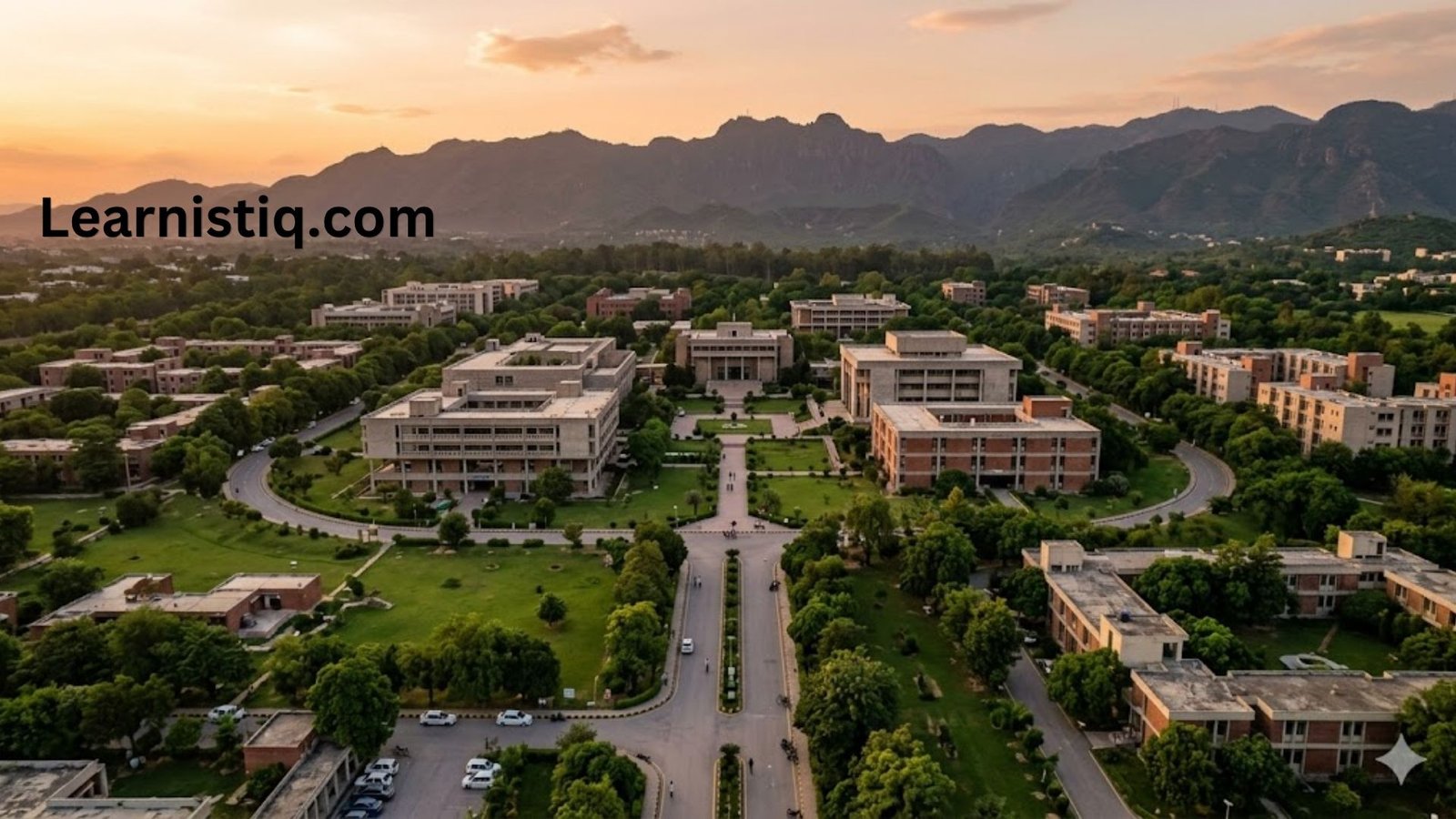
Pakistan has one PIEAS university that built the country’s nuclear capability, charges Rs. 62,500 per semester, and sends graduates into positions that are never publicly advertised. Most students have heard the name. Almost none of them understand what studying there actually means for the next forty years of their life.
That gap is what this guide closes.
Learnistiq.com went through the real numbers — closing merits by program , entry test strategy, career pipelines, scholarship access, campus reality, and the honest comparison every student needs before making a decision this significant. No recycled eligibility tables. No copy-pasted ranking data. Just the information a student standing at this specific crossroads actually needs in 2026. If you want a ranked list with five bullet points, there are hundreds of websites that already wrote that article. This is not that article.
What PIEAS University Actually Is — Before Anything Else
Every website starts with the same sentence. Founded in 1967. Number one engineering university. PAEC affiliated. QS ranked. Those facts are accurate. They are also almost entirely useless as a basis for a decision.
Here is what actually matters.
PIEAS was not designed to be a university. It was built as a Reactor School — a technical training institution created specifically to develop the workforce Pakistan needed to manage its nuclear energy infrastructure. It became the Centre for Nuclear Studies in 1976. It gained independent university status in 1997. It received doctorate-awarding authority in 2000. The founding purpose never left. The institution grew in academic structure and programme breadth, but it never disconnected from the function it was created for — producing technically exceptional people for the most consequential work happening in this country When you study at PIEAS, you are not simply attending a well-ranked university. You are entering a pipeline. That pipeline leads to programmes, positions, and technical environments that no other university in Pakistan can access regardless of its ranking, its fee structure, or its brand name.
Understanding that distinction is the only foundation from which an honest decision about PIEAS can be made. The HEC has ranked PIEAS as the engineering university in Pakistan many times. This was happened in 2006, 2010, 2012 and 2013.
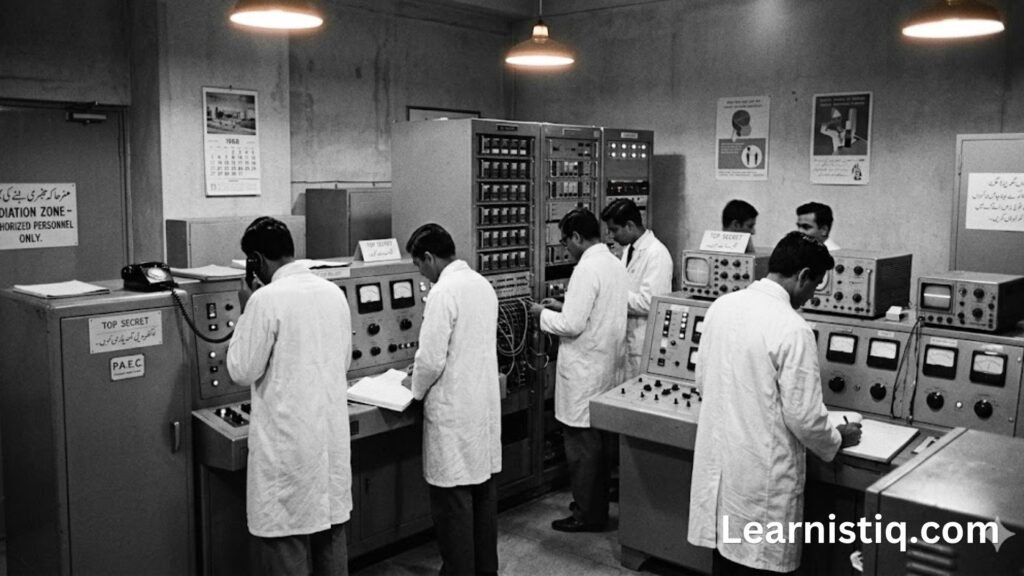
The QS World University Rankings placed PIEAS between 721 and 730 in the world for 2025. The QS Asia University Rankings also ranked PIEAS first in Pakistan and 146th in Asia in 2019. PIEAS comes in at 47th on the QS Top 50 Under 50 list. This list includes universities that’re less than fifty years old. Here PIEAS competes with universities from, over the world.
The Numbers That Tell the Real Story
PIEAS has approximately 3,900 students in total. Around 2,600 are undergraduates, 800 are postgraduates, and 500 are doctoral researchers. The faculty consists of 170 members, more than 150 of whom hold PhDs. Administrative staff numbers above 550.
Run those numbers against each other and something becomes immediately clear.
At PIEAS, the ratio of PhD-level faculty to students is unlike anything available at Pakistani universities with enrolments in the tens of thousands. You are not anonymous here. Your work is seen. Your weaknesses are addressed. The faculty knows your name because the arithmetic of the place makes anonymity structurally impossible.
The campus occupies 312 acres in Nilore, Islamabad. It is fully residential and entirely self-contained. Every facility a student needs for four years exists on campus — academic, residential, medical, financial, and recreational.
The semester fee for a BS programme is Rs. 62,500.
BS Programmes — Scope and Where Each One Actually Leads
PIEAS offers six undergraduate programmes. Each one deserves to be understood in specific terms — not just as a subject label, but in terms of where it takes you after graduation.
BS Electrical Engineering
The curriculum covers power systems, control systems, signal processing, electronics, and electromagnetic theory. Students work in labs connected to active research projects rather than simulated exercises designed to fill course hours. The career scope from BS EE at PIEAS runs directly into PAEC’s power engineering division, NDC’s systems work, and NESCOM’s electronics and guidance program. These are not conventional corporate roles. They are technically demanding, nationally significant positions filled through institutional pipelines rather than public job advertisements.
For students who want to work at the intersection of power systems and national infrastructure, EE at PIEAS is one of the strongest pathways in the country.
BS Mechanical Engineering
The program is oriented toward precision manufacturing, thermal systems, and materials behavior under extreme conditions — skills with direct application in nuclear plant operation and materials testing environments. Graduates from this program work in environments that most mechanical engineers in Pakistan never encounter. The labs here are connected to research and development work that runs alongside the academic program, not beneath it.
BS Chemical Engineering
Chemical engineering at PIEAS has a focus that distinguishes it from the same degree at every other Pakistani university. The curriculum integrates process engineering with nuclear fuel cycle concepts and radiation chemistry — areas that appear nowhere else in Pakistan’s undergraduate landscape. Students interested in energy sector work at the process level, particularly in nuclear fuel processing and waste management, will find a depth here that cannot be replicated elsewhere.
BS Metallurgy and Materials Engineering
This is one of the least discussed program at PIEAS and one of the most strategically important ones on offer anywhere in Pakistan. Materials engineering underpins almost every other technical discipline at the national level — from structural alloys in reactor components to special materials for defense applications. The program at PIEAS is connected to active research in these areas in a way that makes the undergraduate experience genuinely research-adjacent rather than purely academic.
This degree also has the most accessible closing merit among all PIEAS programmes — approximately merit position 774 in recent cycles. Students whose aggregate might not place them in EE or CS but who are willing to commit to a technically demanding and genuinely consequential field will find a real opportunity here.
BS Computer and Information Sciences
CS at PIEAS is not the same as CS at FAST or COMSATS, and understanding that distinction before you apply is important.
FAST CS is designed to produce graduates who enter the software industry immediately — product companies, tech firms, startups. The curriculum is tuned to that outcome and the alumni network reinforces it at every stage. PIEAS CS is research-oriented. The program covers algorithms, software systems, database architecture, and cybersecurity with a depth that favors students interested in applied computing at the research level. Graduates go into cybersecurity roles at national institutions, systems engineering positions at PAEC-connected organizations, and postgraduate research programm domestically and internationally.
If your goal is a software company or a tech startup, FAST is the more direct route. If your goal is research-level computing, national cybersecurity infrastructure, or a PhD, PIEAS CS is worth serious consideration.
BS Physics
BS Physics at PIEAS has a position in Pakistan’s higher education landscape that no other institution can replicate.
The program is connected to research in medical physics, radiation physics, and materials science through the departments and labs that operate alongside it. Students who complete BS Physics at PIEAS and continue into MS program here access research environments — in nuclear medicine, photodynamic therapy, and radiation oncology — that simply do not exist anywhere else in Pakistan.
For students interested in physics as a foundation for serious postgraduate research rather than as a standalone qualification, this is one of the strongest options in the country.
Over all progress
Postgraduate Programmes — Where PIEAS Becomes Truly Unique
At the postgraduate level, PIEAS offers program in areas that have no equivalent at any other Pakistani university. Nuclear Engineering. Medical Physics. Radiation Physics. Nuclear Medicine. Radiation and Medical Oncology. Materials Engineering. Process Engineering. Systems Engineering. Cyber Security. Applied Mathematics. Chemistry. Analytical Chemistry. Mineral Resource Engineering. The majority of MS students at PIEAS are fully sponsored. Most doctoral students are funded. Partial financial support is available for a significant number of undergraduates. The acceptance rate for BS admissions is approximately one to two percent of applicants. For MS program it is three to four percent. These numbers reflect the ratio of applicants to available seats — not the difficulty of the work for students who are admitted.
The Four Constituent Colleges
PIEAS has four colleges that’re part of it.
The Karachi Institute of Power Engineering. KINPOE-C. Is in Karachi. This college teaches people about nuclear power engineering.
The National Institute of Biotechnology and Genetic Engineering. NIBGE-C. Is in Faisalabad. It teaches biotechnology and genetic engineering to graduate students.
The Nuclear Institute of Agriculture and Bio Sciences. NIAB-C. Is also in Faisalabad. This college uses techniques to help with agriculture.
The National Institute of Laser and Aptronics. NILOP-C. Is located near the campus at Nilore. It does research on laser technology and optronic.

These colleges are not the same as the main campus, in different places. Each PIEAS college is special. Does its own kind of research that is connected to what PIEAS does overall.
Admissions — The Complete Process
Eligibility
For BS Electrical Engineering, Mechanical Engineering, Chemical Engineering, and Metallurgy and Materials Engineering, you need FSc Pre-Engineering with at least 60 percent in both Matric and Intermediate.
For BS Computer and Information Sciences, both FSc Pre-Engineering and ICS with Physics, Mathematics, and Computer Science are accepted.
Pre-Medical students may apply for BS Physics and BS Computer and Information Sciences.
DAE holders are eligible for BS Engineering programmes under PEC policy, provided both Matric and DAE results carry at least 60 percent in relevant subjects.
O-Level and A-Level students need an IBCC equivalence certificate. The O-Level component carries 40 percent weight in the merit formula for these students.
Awaiting-result candidates may apply but must confirm the 60 percent minimum before the joining date.
How to Apply
The admissions portal is at admissions.pieas.edu.pk.
Complete the online application form. Upload scanned copies of your Matric certificate and marks sheet, your FSc marks sheet or result card, your CNIC or B-Form, and a passport-size photograph on a white background.
Pay the application processing fee. Within the regular deadline it is Rs. 3,500. The late window carries Rs. 5,000. This fee is non-refundable and cannot be transferred between test sittings.
Download and print your call letter after document verification is complete. Appear at the entry test centre and date printed on your call letter.
The Entry Test
PIEAS conducts its own entry test. ECAT is not accepted here. PIEAS does not accept ECAT at all — it is a completely separate examination used by UET Lahore and Punjab-affiliated institutions. ENTRY TEST .
The format is 100 MCQs over three hours. There is no negative marking. You select the paper that corresponds to your HSSC stream — Pre-Engineering, ICS, Pre-Medical, or Science General.
For Pre-Engineering students, the breakdown is 30 Physics questions, 30 Mathematics questions, 20 Chemistry questions, 10 English questions, and 10 General Knowledge and Reasoning questions.
The merit formula is as follows.
Final Aggregate equals Entry Test percentage multiplied by 0.60, plus HSSC percentage multiplied by 0.25, plus SSC percentage multiplied by 0.15.
The entry test carries 60 percent of your final aggregate. This is the number that determines whether you receive an offer. Students who prepare seriously for FSc but treat the entry test as secondary consistently miss their target programme by small margins. The order of priority should be reversed — entry test first, then HSSC, then SSC.
Closing Merit Positions
PIEAS does not publish merit lists as downloadable PDFs. Merit numbers and admission offers appear directly on your portal account dashboard.
Based on the second merit list from the most recent admissions cycle, closing positions by programme were approximately as follows.
BS Computer and Information Sciences closed at merit position 324. BS Physics at 492. BS Mechanical Engineering at 617. BS Electrical Engineering at 651. BS Chemical Engineering at 716. BS Metallurgy and Materials Engineering at 774.
A lower position number means a stronger candidate. Position 200 is stronger than position 500. These figures change every cycle — use them as orientation, not as a guarantee.
PIEAS releases multiple merit lists. If you do not appear in the first list, do not withdraw your application. Seats from declined offers move into subsequent rounds. Many students receive offers in the second or third list.
Fees — The Complete Picture
The BS semester fee is Rs. 62,500. Across eight semesters, a complete four-year undergraduate degree costs approximately Rs. 5,00,000 in tuition.
For comparison — one semester at NUST costs between Rs. 1,50,000 and Rs. 2,50,000. A full degree at FAST runs between Rs. 20,00,000 and Rs. 28,00,000 depending on the year and programme. PIEAS charges less for an entire four-year degree than most private universities charge for a single academic year.
Hostel fees per month are structured as follows.
A shared room with a community bathroom is Rs. 6,750. A shared room with an attached bathroom is Rs. 9,000. A single room with a community bathroom is Rs. 11,250. A single room with an attached bathroom is Rs. 13,500.
Financial support available to students includes the HEC Need-Based Scholarship under the Ehsaas USTP programme, PEEF funding for eligible Punjab-domicile students, and PIEAS institutional aid on a limited basis. Students from families with a monthly income below approximately Rs. 45,000 are typically eligible for need-based consideration. Applications go through the Financial Aid office after admission is confirmed.
The financial access at PIEAS is not a consolation for students who cannot afford better options. It is a deliberate institutional policy. PIEAS has stated directly that lack of financial resources should not be an obstacle to acquiring quality education here. The fee structure reflects that position consistently.
Campus Life — What It Is Actually Like
The PIEAS campus in Nilore is residential and self-contained. Most students live on campus for the full duration of their degree. That is not just a housing arrangement — it shapes the entire social and academic experience.
The residential infrastructure includes eight hostel blocks with a separate female hostel. The campus runs a subsidised mess, a cafeteria, a fitness centre, a newly built mosque, a bank, a post office, and shops for daily needs. An on-call doctor and a dispensary with ambulance service operate around the clock. Sports facilities include a cricket ground, badminton courts, and volleyball courts alongside indoor fitness options.
The academic infrastructure includes a computer centre with over 200 machines available twenty-four hours, HEC Digital Library access across approximately 1,500 LAN nodes, and internet connectivity throughout the campus including in the hostels.
The honest picture of daily life is this.
PIEAS is quiet. It is focused. It is separated from Islamabad city. A final-year Computer Science student who documented his experience there described the morning mess as lively, the cafeteria surrounded by greenery as a genuine place to decompress, and daily cricket sessions as a real part of the campus rhythm. He also noted that some faculty rely heavily on slides without enough personal engagement, and that mess food quality has dipped recently due to inflation.
That is what the place actually looks and feels like day to day.
If you need a campus that keeps pace with city life, that gives you access to events, a broad social scene, and proximity to Islamabad — PIEAS will feel limiting. That is not a flaw in the institution. It is simply the design of a place built for a specific kind of focused work. If you work better in a contained environment where the people around you are oriented toward serious technical work and the distractions are minimal — PIEAS will suit you very well.
Is PIEAS a Good Choice for Female Students
Yes.
The campus has a dedicated female hostel with its own separate facilities. Female students enroll actively across all program. Campus security operates continuously. The environment is professional and structured in a way that many female students and their families find reassuring rather than limiting. The physical isolation from Islamabad city that some students find restrictive is, for many female students and their families, precisely the kind of controlled and focused environment they are looking for.
Career After PIEAS — Read This Section Carefully
PIEAS graduates do not typically search for jobs on LinkedIn or send applications through job boards. That statement needs context so it is not misread. It is not that PIEAS graduates struggle to find employment. It is that the work they are qualified for is not publicly advertised in the first place.
PAEC, KRL, NDC, and NESCOM recruit through institutional pipelines that run directly from PIEAS. These positions are identified, communicated, and filled through relationships between the institution and the organisations it serves — not through open competitive applications.
The career pathway from PIEAS leads into Pakistan’s most sensitive and most strategically significant technical infrastructure. That access is not available through any other university regardless of ranking, fee structure, or reputation. It exists specifically because of what PIEAS is and where it sits in the national system.
For students whose goals point in that direction — PIEAS is not merely a good option. It is the only option.
For students whose goals point toward the private technology sector, multinational corporations, entrepreneurship, or settling abroad within a few years of graduation — PIEAS is genuinely the wrong fit. Choosing it for its ranking when your actual destination is somewhere else entirely is how students end up four years later with a degree that does not open the doors they expected.
PIEAS maintains active research linkages with the International Atomic Energy Agency, CERN, and the International Centre for Theoretical Physics. A UNESCO Chair titled Light for Health was established at PIEAS in recognition of its contributions to Photodynamic Therapy research. PIEAS participates in the PAK-LINDAU Nobel Laureate Meeting programme for young scientists and steers national STEM outreach at the school level.
Approximately two percent of MS graduates from PIEAS have received Pakistan’s highest national civil awards — Nishan-i-Imtiaz, Hilal-i-Imtiaz, Sitara-i-Imtiaz, the Pride of Performance Award, and the Tamgha-i-Imtiaz. That statistic does not exist at any other Pakistani university. It reflects where these graduates go and what they build when they get there.
Entry Test Preparation — A Realistic Three-Month Plan
The entry test carries 60 percent of your aggregate. Treat it as the primary objective from the moment you decide to apply. Everything else in your application is secondary to this number.
Month One — Build the Conceptual Foundation
Physics work this month should cover all of mechanics in depth — Newton’s laws, projectile motion, circular motion, and rotational dynamics. Add waves and sound in full, electricity and magnetism across all topics, and modern physics covering photoelectric effect, atomic structure, and nuclear reactions.
Mathematics work should cover quadratics and functions, sequences and series, trigonometric identities and equations, coordinate geometry in full, vectors, matrices and determinants, and limits and basic derivatives.
Chemistry work should cover chemical bonding, states of matter, thermodynamics, chemical equilibrium, electrochemistry, and the core organic reaction mechanisms.
Month Two — MCQ Drilling
Minimum fifty timed MCQs every day. Track which subjects cost you time and which cost you accuracy — these are different problems requiring different approaches. Return to conceptual material in weak areas rather than drilling more questions with the same wrong foundation underneath them.
Work through PIEAS past papers. The questions at PIEAS are conceptual. They test whether you understand what is happening in a physical or chemical system — not whether you have memorised a formula. Students who do pure rote preparation consistently underperform on this paper regardless of their FSc percentage.
Month Three — Full Mock Tests and Pressure Practice
Run one complete three-hour mock test every week. Include bubble sheet filling in your timing practice. Students who practise without the bubble sheet consistently underestimate how much time it takes under real conditions and lose marks at the end of the paper.
During the actual test, answer the questions you are confident about first and mark uncertain ones to return to. Leave nothing blank. There is no negative marking. An educated guess on every remaining question is strictly better than an empty bubble sheet when time runs out.
English and General Knowledge together carry twenty questions. These are the most straightforward marks on the entire paper and the most frequently wasted. Prepare vocabulary, grammar, and current affairs in parallel with your science subjects from the beginning of your preparation, not as an afterthought in the final week.
PIEAS Compared Honestly
| Comparison | Other University Strengths | PIEAS Strengths | Best Choice If… |
|---|---|---|---|
| PIEAS vs NUST | Larger campus, active social/extracurricular life, stronger corporate placement, 250 international partnerships, startup park, higher fees | Deeper research specialisation, 4–5x lower fees, focused environment, access to national programmes | NUST → corporate sector, international mobility, entrepreneurship PIEAS → national research, specialised technical careers |
| PIEAS vs GIKI | Strong industry placements in conventional engineering, isolated campus culture, stronger corporate engineering connections | Greater research depth in specialised fields, significantly lower fees | GIKI → standard industry/corporate engineering PIEAS → specialised research careers |
| PIEAS vs FAST | Best in Pakistan for software industry, most active tech alumni network, curriculum tuned to industry outcomes | Research-oriented CS, nationally focused, smaller but deeply connected cohort | FAST → software/product companies PIEAS → research computing, national cybersecurity infrastructure |
| PIEAS vs UET | Largest public engineering university, broad disciplines, strong conventional engineering for industrial sector | More selective, more research-intensive, specialised — graduates access environments UET graduates rarely reach | UET → broad engineering industry PIEAS → specialised, research-intensive, restricted-access environments |
The Direct Answer
PIEAS is right for you if research interests you genuinely rather than just professionally, if contributing to Pakistan’s most significant national programmes matters to you, if a focused and somewhat isolated environment is where you do your best work, and if financial access is a real factor in your decision.
PIEAS is not right for you if your destination is a tech company, a startup, or a multinational. It is not right for you if you want to settle abroad within a few years of graduating. It is not right for you if campus culture and social life are important to how you function and thrive over four years. Both of those are completely valid places to land. Every student reading this has different goals and different circumstances, and both directions are legitimate. The only mistake is choosing the wrong one because a ranking table or a relative’s opinion made the decision for you instead of an honest look at where you actually want to go.
Questions Students Actually Search For
Does PIEAS accept ECAT?
No. PIEAS conducts its own entry test. ECAT is used by UET Lahore and affiliated institutions in Punjab. They are entirely separate examinations.
Can Pre-Medical students apply to PIEAS?
Yes. Pre-Medical students may apply for BS Physics and BS Computer and Information Sciences.
Is PIEAS only for nuclear engineering?
No. Nuclear engineering exists at the postgraduate level. Undergraduate program cover electrical, mechanical, chemical, metallurgy, computer science, and physics. The nuclear connection is institutional — it does not restrict what you study here.
What happens if I miss the first merit list?
Do not withdraw your application. PIEAS releases multiple merit lists. Seats declined in earlier rounds move to subsequent lists. Many students receive offers in the second or third round.
Can O-Level and A-Level students apply?
Yes, with an IBCC equivalence certificate. The equivalence contributes 40 percent of the O-Level component in the merit formula.
-
FAST-NUCES Review 2026: Complete Guide
Let me be straight with you from the very first line. Every year, hundreds of students ask me the same question: “Should I join FAST-NUCES or not?” My answer is never simple because FAST is not the right choice for everyone in 2026. It can be an excellent university for the right student, but a … Read more
-
Aga Khan University Complete Guide 2026
Every year a lot of students from Pakistan want to go to Aga Khan University. It is their choice.. Many of these students do not have the right information about getting in. They also do not know what the entry test is like. This guide is here to help with that. If you are a … Read more
-
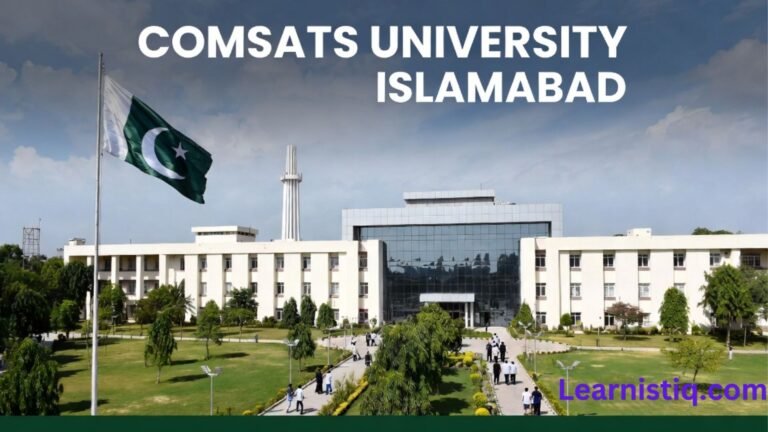
COMSATS University Islamabad (CUI) Complete Guide 2026
Every year from March to June, my phone stays busy. Parents from Rawalpindi, Multan, Peshawar, and other cities call me with the same question: “Bhai, is COMSATS University Islamabad a good choice for my child?” After 12 years of guiding students, my answer has become clear and confident. Yes, for the right student, COMSATS University … Read more

Shahzaib Khan is the founder of Learnistiq.com
and an independent education researcher based in
Rawalpindi, Pakistan. With over 8 years of
experience in student counseling and educational
guidance, he has personally helped hundreds of
Pakistani students choose the right universities
and career paths.
His research focuses on Pakistani university
admissions, online degree outcomes, and practical
career guidance for students who cannot afford
expensive counseling services. Every article on
Learnistiq is written from real experience and
verified information — not copied or AI-generated
content.
Shahzaib has been featured in student communities
across Pakistan and is committed to providing
honest, pressure-free guidance to students from
Rawalpindi, Lahore, Karachi, and beyond.