
Forensic science is the systematic application of chemistry, biology, physics, and digital analysis to legal proceedings criminal, civil, and regulatory. John Jay College of Criminal Justice offers a forensic science program, and covers specializations including criminalistics, forensic toxicology, and forensic molecular biology. This comprehensive guide defines what forensic science is, identifies who is considered the father of forensic science, explains what forensic scientists do, details how to become a forensic scientist.
subject material
- 1 A Precise Academic Definition:
- 2 Who Is Considered the Father of Forensic Science?
- 3 Edmond Locard (1877–1966) — The Most Widely Recognised Father of Forensic Science
- 4 What Forensic Scientists Do?
- 5 Does John Jay College Have a Forensic Science Program?
- 6 How to Become a Forensic Scientist: A Structured Academic and Professional Roadmap–
- 6.1 Step 1 : Build a Rigorous Scientific Foundation (Undergraduate Level)
- 6.2 Step 2 : Accumulate Laboratory Experience
- 6.3 Step 3 : Pursue Advanced Study Where Required
- 6.4 Step 4 : Develop Communication as a Core Professional Competency
- 6.5 Step 5 : Obtain Certification and Commit to Continuing Education
- 7 Forensic Science Career Outlook, Employment Sectors, and Salary Data
- 8 Salary Data (United States, 2024–2025)
- 9 Conclusion from learnistiq.com:
A Precise Academic Definition:
The word forensic derives from the Latin forensis meaning “of the forum,” public, or belonging to open debate and argumentation. In ancient Rome, the forum was the civic space where disputes were argued before citizens and adjudicators alike. That etymology is not incidental; it is definitional. Forensic science is, at its core, science brought into the public arena of law.
A precise modern definition is this:(forensic science is the disciplined application of natural and physical sciences including chemistry, biology, physics, toxicology, geology, and digital informatics — to the analysis and interpretation of evidence within civil, criminal, and regulatory legal proceedings). It is not a single laboratory technique. It is an interdisciplinary enterprise governed by rigorous scientific and juridical standards. The forensic sciences are deployed around the world to resolve civil disputes, to justly enforce criminal statutes, and to protect public health. Wherever an impartial, objective scientific analysis is required to establish truth within a legal context. whether in a murder trial, a fraud investigation, an environmental enforcement action, or a pharmaceutical compliance matter forensic science stands at the center of the inquiry.
“Forensic science is not about drama or spectacle. It is about the disciplined, impartial application of scientific method to the most consequential human questions — questions of innocence, guilt, and justice.”
It is important to state clearly what forensic science is not. It is not the exclusive domain of crime scene investigators. It is not adequately represented by television procedurals. And it is not a career for those who prefer theatrical conclusions to methodical evidence. It is, in every meaningful sense, a science first and a legal instrument second.
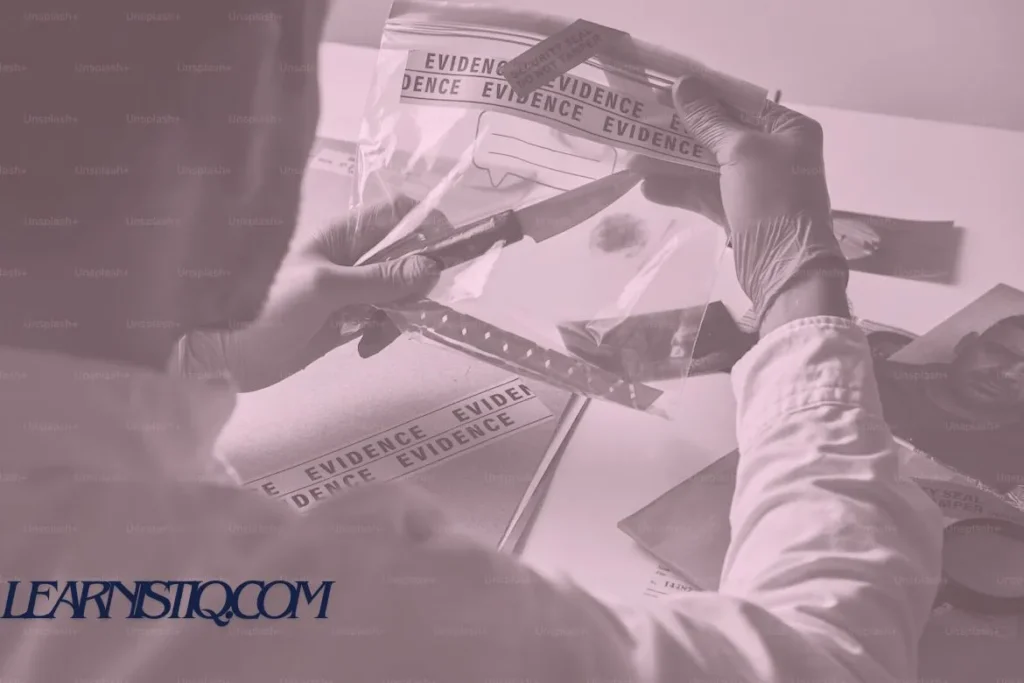
Who Is Considered the Father of Forensic Science?
The question of who is considered the father of forensic science is one that historians of science approach carefully, because forensic science is a convergence of many disciplines — each with its own pioneering intellect. No single individual invented it wholesale. However, several figures stand above all others, and one commands near-universal recognition as the founding patriarch of the discipline in its modern, laboratory-based form.
Edmond Locard (1877–1966) — The Most Widely Recognised Father of Forensic Science
The French criminologist and forensic scientist Edmond Locard is most broadly regarded as the father of modern forensic science. Trained in both medicine and law at the University of Lyon, Locard established the world’s first dedicated forensic science laboratory in Lyon, France, in 1910 an institution that became the intellectual template for crime laboratories worldwide. His enduring contribution is Locard’s Exchange Principle, which states that every physical contact between two objects or persons results in a mutual transfer of material. Expressed most directly: “every contact leaves a trace.” This principle deceptively simple, scientifically profound underpins the entire theoretical architecture of trace evidence analysis. Every hair fiber, every soil particle, every fingerprint, every digital footprint discovered at a crime scene is a material expression of Locard’s foundational insight.
"Every contact leaves a trace." — Edmond Locard. Four words that created a science.Other Foundational Figures:
Alongside Locard, the intellectual foundations of forensic science were laid by several other exceptional scientists, each of whom is considered the father of their specific sub-discipline:
- Mathieu Orfila (1787–1853) — a Spanish-French toxicologist and Dean of the Paris Faculty of Medicine, widely regarded as the father of forensic toxicology. Orfila was the first to systematically demonstrate that chemical poisons could be detected in biological tissues with sufficient reliability for courtroom use. His 1813 Traité des Poisons established toxicology as both a science and a legal instrument.
- Francis Galton (1822–1911) — British polymath and first cousin of Charles Darwin, Galton conducted the foundational systematic study of fingerprints as a means of personal identification. His 1892 book Finger Prints provided the mathematical and empirical basis for the uniqueness of fingerprint patterns — a principle still operative in every forensic identification laboratory today.
- Karl Landsteiner (1868–1943) — Austrian-American immunologist and Nobel laureate, Landsteiner discovered the ABO blood group system in 1901, providing forensic science with one of its most powerful serological tools. His work made it possible, for the first time, to characterize biological evidence at a molecular level.
- Alphonse Bertillon (1853–1914) — French police officer and biometrics researcher who developed anthropometry — the systematic measurement of the human body for purposes of criminal identification — and pioneered standardized crime scene photography. Bertillon is often recognised as the father of criminal identification science.
These scholars did not merely advance science; they created the intellectual conditions under which science could be admitted as evidence, trusted by courts, and used as the basis for verdicts. Their legacy is the discipline you are now studying.What Forensic Scientists Do?
Roles, Responsibilities, and Daily Realities?
A forensic scientist is, above all else, a scientist. When that scientific knowledge is applied to questions before a court of law when the laboratory report becomes legal evidence the scientist becomes a forensic scientist. This distinction matters. The forensic scientist’s primary allegiance is not to the prosecution, not to the defense, and not to public opinion. It is to the integrity of the scientific method and the truth it produces.
. Evidence Collection and Scene Documentation
In most cases, physical evidence is submitted to the forensic scientist for analysis in a controlled laboratory environment. In other circumstances — particularly in complex homicide investigations, fire and explosion cases, and environmental contamination matters — the scientist must attend the scene directly, document spatial evidence relationships, and collect samples before conditions change or contamination occurs. At the scene, the forensic scientist must immediately address a fundamental question: which examinations are both scientifically appropriate and legally relevant to the disputed issue? Is the powder in question cocaine or an adulterant? Was the fire accidental or deliberately set? Did the road defect exist prior to the collision? The selection of analytical approach is itself a scientific decision of significant consequence.
. Laboratory Analysis and Interpretation
Having received or collected evidence, the forensic scientist conducts the most appropriate tests and analyses for the specific question at hand. This may involve organic chemistry, mass spectrometry, DNA electrophoresis, digital extraction, microscopic examination, or any of dozens of other validated analytical techniques. The process must be:
- Methodologically sound — every technique applied must be validated, peer-reviewed, and accepted within the relevant scientific community.
- Meticulously documented — every step, every measurement, every instrument reading must be recorded in a contemporaneous log that can withstand adversarial scrutiny.
- Chain-of-custody compliant — the unbroken, verified record of who handled the evidence, when, and under what conditions is not administrative formality. It is the juridical foundation on which admissibility rests.
- Objectively interpreted — the forensic scientist must interpret findings without bias — neither toward conviction nor toward exoneration, but toward whatever the evidence actually supports.
. Expert Witness Testimony
The culmination of forensic work is, in a large proportion of cases, the courtroom. Here, the forensic scientist occupies a uniquely powerful and uniquely exposed position. Unlike an ordinary fact witness who may only report what they personally observed an expert witness is permitted by the court to offer an opinion on the meaning and significance of their findings. This distinction carries enormous legal weight. When a forensic chemist testifies not merely that a substance tested positive for a specific alkaloid signature, but that in their professional expert opinion that substance constitutes a specific controlled narcotic they are bridging the gap between raw data and legal conclusion in a way no lay witness is permitted to do. To qualify as an expert witness before a court, the forensic scientist must demonstrate documented education, training, and practical experience in the relevant scientific discipline. Their qualifications may be challenged by opposing counsel. Their methodology may be scrutinized under Daubert or Frye standards. Their impartiality may be questioned. The discipline demands not only technical precision but intellectual composure under adversarial conditions.
. Research, Innovation, and Public Safety Contributions
Modern forensic scientists are not merely custodians of established techniques. Many serve as active researchers advancing the frontiers of the field. The National Institute of Standards and Technology (NIST), in particular, has driven landmark forensic innovations in the United States:
- Opioid detection — NIST scientists have developed validated analytical tools enabling forensic chemists to safely and reliably detect synthetic opioids including fentanyl and its analogues. NIST research has also documented a disturbing rise in xylazine — a veterinary tranquilizer now widely appearing as a dangerous adulterant in street drug supplies — directly supporting law enforcement and public health responses to the opioid epidemic.
- Forensic DNA standards — NIST has helped mature the field of forensic DNA analysis through the development of enhanced profiling standards, improved reference materials, and a critical assessment of DNA mixture interpretation methods — finding that existing published literature lacks sufficient data to independently validate some widely used approaches.
- Digital forensics infrastructure — The NIST National Software Reference Library provides forensic examiners with one of the largest publicly accessible collections of computer software reference data in the world, enabling the authentication and analysis of digital evidence in criminal proceedings.
- Biometric standards and bias evaluation — NIST has created comprehensive biometric research databases and evaluated algorithmic bias in facial recognition tools, directly improving the accuracy and fairness of identification technologies used by law enforcement agencies globally.
Does John Jay College Have a Forensic Science Program?
Among prospective forensic science students in the United States, one institution surfaces with particular frequency in academic discussions and career guidance literature: John Jay College of Criminal Justice, a senior college of the City University of New York (CUNY) system, located in Manhattan. The question — does John Jay have a forensic science program? — deserves a direct, accurate, and complete answer.
Yes – and It Is Among the Most Distinguished in the United States
John Jay College of Criminal Justice offers both undergraduate and graduate forensic science programs through its Department of Sciences. At the undergraduate level, the college confers a Bachelor of Science in Forensic Science with concentrations in forensic chemistry and criminalistics. At the graduate level, a Master of Science in Forensic Science is available with specializations that include forensic toxicology and forensic document examination.
What sets John Jay apart from other institutions offering forensic science degrees is its institutional mission. As a college whose entire academic culture is organized around criminal justice, law, and public administration, John Jay provides forensic science students with a richly contextual environment for their scientific training. Laboratory instruction in instrumental analysis, trace evidence examination, and DNA profiling coexists with courses in law, criminal procedure, ethics, and criminology — producing graduates who understand not merely how to perform an analysis, but what that analysis means within the architecture of the justice system.
“John Jay College occupies a singular position in American forensic education , where the science of evidence meets the study of justice at every level of the curriculum.”
FEPAC Accreditation:
The forensic science program at John Jay College holds accreditation from the Forensic Science Education Programs Accreditation Commission (FEPAC) – the national body responsible for ensuring that academic forensic science programs meet the professional and scientific standards required by employers, accrediting laboratories, and the courts. For students intending to work in federal or state crime laboratories, FEPAC accreditation is often not merely preferred but required for employment eligibility.
FEPAC-accredited programs must demonstrate rigorous scientific curriculum content, qualified faculty, adequate laboratory instrumentation, and quality assurance standards consistent with those of operating forensic laboratories. Graduating from a FEPAC-accredited institution is among the most meaningful academic signals a forensic science candidate can offer to a prospective employer.
How to Become a Forensic Scientist: A Structured Academic and Professional Roadmap–
A career in forensic science is not casually entered, and it is not sustained by enthusiasm alone. It demands a sustained, multi-year commitment to scientific education, laboratory skill development, professional certification, and the cultivation of intellectual qualities that few technical careers require so comprehensively. The following roadmap reflects the professional standards of the field as it actually exists — not as television dramatizes it.
Step 1 : Build a Rigorous Scientific Foundation (Undergraduate Level)
The minimum educational credential for entry-level forensic science positions is a bachelor’s degree in a natural or physical science — chemistry, biology, biochemistry, or a FEPAC-accredited forensic science program. The quality of the science matters more than the label of the degree. A forensic scientist with deep undergraduate chemistry training is substantially better prepared for laboratory work than one whose degree emphasized procedural training over fundamental science. Alongside core science coursework, aspiring forensic scientists should actively pursue: mathematics and statistics (which underpin the probabilistic reasoning central to DNA analysis and trace evidence interpretation); technical writing; and ideally some coursework in law, criminal procedure, or legal studies. These are not electives — they are the intellectual infrastructure of the profession.
Step 2 : Accumulate Laboratory Experience
Academic credentials alone are insufficient. Forensic science is a laboratory-based discipline, and accredited crime laboratories place decisive weight on documented, hands-on experience. Internships with medical examiners’ offices, externships with state or county crime laboratories, and undergraduate research positions in analytical chemistry or molecular biology are not enrichments they are, in practical employment terms, prerequisites for competitive candidacy.
Step 3 : Pursue Advanced Study Where Required
Certain specializations forensic toxicology, forensic pathology, digital forensics at the federal level, academic research require graduate education. A Master of Science provides depth of specialization and significantly expands employment eligibility. A doctoral degree opens pathways to research leadership, university faculty positions, and senior expert witness roles. Students drawn to the intellectual frontiers of the field developing new analytical standards, challenging existing methodologies, or contributing to the scientific literature will find graduate training indispensable.
Step 4 : Develop Communication as a Core Professional Competency
This step is systematically underestimated. The forensic scientist who cannot explain the significance of a gas chromatography-mass spectrometry result to a jury of twelve non-scientists has a fundamental professional limitation, regardless of their laboratory competence. Public speaking, technical writing, scientific communication, and the capacity for intellectual composure under hostile cross-examination must be treated as skills requiring deliberate cultivation not assumed byproducts of scientific training.
Step 5 : Obtain Certification and Commit to Continuing Education
Professional certifications from bodies such as the American Board of Criminalistics (ABC) or the International Association for Identification (IAI) signal demonstrated competence within specific sub-fields and are increasingly expected by employers. The field of forensic science evolves continuously new analytical techniques emerge, existing methodologies are reassessed, and courts periodically revisit the evidentiary standards applicable to specific disciplines. The forensic scientist who ceases to engage with the current scientific literature ceases, in a professionally meaningful sense, to be current
Forensic Science Career Outlook, Employment Sectors, and Salary Data
The forensic science employment market is characterised by strong, sustained growth. According to the United States Bureau of Labor Statistics (BLS), employment of forensic science technicians is projected to grow approximately 13 percent between 2024 and 2034 — a rate nearly four times the national average for all occupations. Approximately 2,900 new positions are anticipated annually across the projection period.
Employment Sectors
- Federal agencies — FBI Laboratory Division, Drug Enforcement Administration (DEA), Bureau of Alcohol, Tobacco, Firearms and Explosives (ATF), Department of Homeland Security, and the National Institute of Standards and Technology (NIST).
- State and county crime laboratories — the largest single employer sector for forensic science technicians and scientists in the United States.
- Medical examiner and coroner’s offices — employing forensic pathologists, forensic toxicologists, forensic anthropologists, and death investigation specialists.
- Digital forensics units — within law enforcement agencies, financial regulatory bodies, cybersecurity firms, and private litigation support companies.
- Academic institutions — university research laboratories, forensic science faculty positions, and expert witness consulting.
- Private forensic laboratories — independent analysis, insurance investigation, civil litigation support, and product liability defence.
Salary Data (United States, 2024–2025)
The median annual wage for forensic science technicians in the United States was approximately $67,440 in May 2024 according to BLS data. Senior forensic scientists, laboratory supervisors, and specialists in high-demand areas particularly digital forensics, forensic toxicology, and DNA analysis regularly command compensation significantly above this median. Doctoral-level researchers and senior expert witnesses in private practice operate at substantially higher levels
Conclusion from learnistiq.com:
Forensic science occupies a unique and irreplaceable position in the architecture of modern civilization. It is the point at which the precision of the laboratory meets the urgency of the courtroom. It is where the dispassionate logic of the scientific method encounters the most consequential human questions __ questions of innocence, guilt, and the accuracy of justice itself. From the foundational insights of Edmond Locard and Mathieu Orfila in the nineteenth and early twentieth centuries, through the transformative DNA exonerations of the late twentieth century, to the contemporary challenges of synthetic opioid identification, algorithmic bias in facial recognition, and the authentication of digital evidence – forensic science has never been more scientifically demanding, and never more consequential. For students considering this path – whether at John Jay College of Criminal Justice, at another FEPAC-accredited institution, or in a graduate research laboratory – the central question is ultimately not one of career opportunity alone. It is a question of vocation. Are you prepared to place the demands of scientific truth above the pressures of advocacy? Are you prepared to stand in a witness box and defend your methodology under adversarial scrutiny? Are you prepared, above all, to accept that the quality of your science may determine the quality of someone’s justice?
If your answer is yes — forensic science may be among the most meaningful careers the twenty-first century can offer.Who is considered the father of forensic science?
: Edmond Locard (1877–1966), a French criminologist and founder of the world’s first forensic laboratory in Lyon, France, is most widely regarded as the father of modern forensic science. His Locard’s Exchange Principle — that every physical contact leaves a trace — remains the theoretical cornerstone of trace evidence analysis. Other foundational figures include Mathieu Orfila (father of forensic toxicology), Francis Galton (pioneer of fingerprint science), Karl Landsteiner (discoverer of the ABO blood system), and Alphonse Bertillon (founder of criminal identification science).
What are the main specializations in forensic science?
The three most established specializations are: (1) Criminalistics — the analysis of physical trace evidence including fingerprints, fibers, firearms, and chemical residues; (2) Forensic Molecular Biology — the examination of biological evidence, primarily through DNA profiling, serology, and tissue analysis; and (3) Forensic Toxicology — the detection and interpretation of drugs, alcohol, and poisons in biological specimens. Additional specializations include digital forensics, forensic accounting, forensic anthropology, and forensic document examination.