
Discover the top ethical challenges of using Artificial Intelligence (AI) in U.S. education — including data privacy, fairness, bias, and equal access. Learn how schools can use AI responsibly to protect students.
subject material
Introduction
Artificial Intelligence (AI) is transforming how schools and universities in the USA teach and evaluate students. From AI tutors to predictive learning systems, technology is shaping the future of education.
But as AI use grows, so do ethical questions: Is student data safe? Are algorithms fair? Are we relying too much on technology?
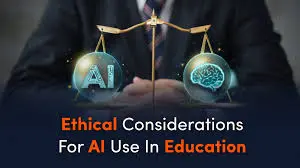
This article explores the ethical issues with AI in education in the USA and how teachers, policymakers, and schools can ensure AI supports — not harms — learning.
Data Privacy and Student Safety
AI systems often gather huge amounts of student information — attendance, grades, and even emotional patterns.
While this data helps personalize learning, it raises serious concerns about privacy and control.
In the USA, the Family Educational Rights and Privacy Act (FERPA) offers protection, but enforcement can be weak when private companies manage school data. Schools should:
- Demand transparency from AI vendors
- Use secure, FERPA-compliant tools
- Inform parents and students about how data is collected and used
Algorithmic Bias and Fairness
AI models learn from human data — and that data may carry hidden biases.
A grading or predictive system could unfairly score students from different backgrounds.
To reduce bias:
- Developers must test AI models with diverse data
- Educators need to review AI recommendations
- Policies should ensure transparency and accountability in how algorithms work
Overreliance on Technology
Relying too heavily on AI tools may reduce teachers’ critical role in education.
AI can help grade or suggest content but cannot understand emotion, creativity, or empathy.
Balanced use is key:
AI should support, not replace, human teaching. Combining technology with teacher guidance ensures more effective and ethical outcomes.
Inequality in Access
Not all schools in the USA can afford advanced AI technologies. Wealthier districts move ahead, while rural or low-income schools fall behind.
This digital gap creates inequality in learning opportunities. Policymakers and education leaders should fund affordable AI tools, ensuring equal access across all states and districts.
Accountability and Transparency
Who is responsible when an AI tool makes a wrong decision?
Without clear rules, accountability can be unclear — is it the school, the software, or the developer?
Solutions:
- Require vendors to publish how AI systems make decisions
- Develop ethical guidelines for AI accountability in education
- Train teachers to understand and oversee AI outputs
The Future of AI Ethics in Education
For AI to truly benefit U.S. education, ethical practices must become standard.
Future goals include:
- Creating AI ethics committees in schools
- Offering teacher training on AI awareness
- Designing inclusive algorithms that represent all students
- Promoting open data and transparency policies
Conclusion
AI is a powerful tool — but it must be guided by ethics, fairness, and transparency.
By addressing privacy risks, bias, and unequal access, American educators can ensure AI enhances learning without harming students’ rights.
In the end, technology should empower learning — not control it.
What laws protect student data in the USA?
The Family Educational Rights and Privacy Act (FERPA) governs how schools handle and share student data
How can schools use AI responsibly?
By following privacy laws, ensuring transparency, training teachers, and reviewing AI decisions regularly.