
Discover the top soft skills for career success. Learn communication, leadership, teamwork & more to grow your career in 2025 and beyond.
subject material
- 1 Guidance
- 2 What Are Soft Skills?
- 3 Why Soft Skills Matter in Career Growth
- 4 Top 10 Essential Soft Skills for Career Growth
- 4.1 1. Communication Skills
- 4.2 2. Emotional Intelligence (EQ)
- 4.3 3. Teamwork and Collaboration
- 4.4 4. Problem-Solving and Critical Thinking
- 4.5 5. Adaptability
- 4.6 6. Leadership and Decision-Making
- 4.7 7. Time Management
- 4.8 8. Networking and Relationship Building
- 4.9 9. Creativity and Innovation
- 4.10 10. Work Ethic and Integrity
- 5 Common Weak Points in Soft Skills Development
- 6 How to Develop Strong Soft Skills (Step-by-Step)
- 7 Soft Skills in the AI Era
- 8 Expert Insight: My Professional Experience
- 9 Conclusion
- 10 Apps for soft skills
Guidance
In today’s rapidly changing world, success isn’t just about what you know , it’s about how you work with others. Whether you’re a student, graduate, or working professional, developing the right soft skills can transform your career path.
This guide explains the most essential soft skills for career growth, why they matter, how to improve them, and the weaknesses to avoid
What Are Soft Skills?
Soft skills are personal and interpersonal abilities that define how effectively you communicate, collaborate, and adapt.
They include emotional intelligence, communication, problem-solving, leadership, and time management — all of which shape your professional personality.
Unlike hard skills (technical or academic abilities), soft skills focus on behavior and attitude, helping you succeed in team-driven environments.
💡 In simple terms: Hard skills get you the job — soft skills help you grow in it.
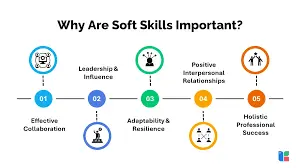
Why Soft Skills Matter in Career Growth
Employers around the world — from the USA to Asia — value candidates who bring empathy, leadership, and adaptability to the workplace.
Key Benefits:
- Higher Employability: 92% of recruiters prefer candidates with strong soft skills.
- Better Teamwork: Encourages collaboration and understanding among colleagues.
- Faster Promotions: Leadership and decision-making skills build trust.
- Adaptability to Change: Helps you handle new challenges with confidence.
- Long-Term Growth: Soft skills ensure sustainable career progress.
Top 10 Essential Soft Skills for Career Growth
1. Communication Skills
Good communication helps you express ideas clearly and confidently — whether in meetings, emails, or presentations.
- Improve by: Practicing active listening, public speaking, and clear writing.
- Tools: Grammarly, Toastmasters, or LinkedIn Learning courses.
2. Emotional Intelligence (EQ)
EQ allows you to understand and manage emotions in yourself and others.
- Why It’s Important: Builds trust and reduces conflicts.
- Improve by: Practicing empathy and self-reflection.
3. Teamwork and Collaboration
Success in any organization depends on how well you collaborate.
- Weak Point: Avoiding team conflicts.
- Solution: Practice open communication and learn conflict resolution skills.
4. Problem-Solving and Critical Thinking
Employers value professionals who can find creative solutions to challenges.
- Example: Analyzing issues and providing data-backed solutions.
- Tip: Practice with real-world case studies or brainstorming sessions.
5. Adaptability
The ability to adjust quickly in changing environments is vital.
- Example: Learning new technologies or roles.
- How to Develop: Embrace lifelong learning and flexibility.
6. Leadership and Decision-Making
Leadership isn’t just about managing people — it’s about inspiring them.
- Weak Point: Hesitating to delegate or take initiative.
- Develop by: Leading small projects or mentoring peers.
7. Time Management
Strong time management improves productivity and reduces stress.
- Improve by: Using tools like Google Calendar or Trello.
- Technique: The Pomodoro method — work 25 minutes, rest 5.
8. Networking and Relationship Building
Professional relationships create opportunities for growth and learning.
- Start by: Attending events, joining LinkedIn groups, or alumni associations.
9. Creativity and Innovation
Innovation drives success in every field.
- Example: Creating new marketing ideas or improving work processes.
- How to Improve: Stay curious and explore new perspectives.
10. Work Ethic and Integrity
Employers seek professionals who are reliable and consistent.
- Weak Point: Poor punctuality or lack of accountability.
- Tip: Deliver work on time and take ownership of your actions.
Common Weak Points in Soft Skills Development
| Weak Point | Description | How to Improve |
|---|---|---|
| Poor Communication | Unclear messaging or misunderstanding | Practice clear and concise speaking |
| Low Confidence | Fear of sharing ideas | Build confidence with public speaking |
| Resistance to Feedback | Taking criticism personally | Learn to accept feedback as learning |
| Lack of Adaptability | Struggling with new changes | Stay flexible and curious |
| Emotional Reactions | Getting frustrated easily | Develop emotional awareness and patience |
How to Develop Strong Soft Skills (Step-by-Step)
- Assess your current strengths – take online personality or skill tests.
- Set small goals – such as “speak once in every meeting.”
- Join workshops or webinars – focus on leadership, EQ, or communication.
- Seek feedback from mentors – they can highlight blind spots.
- Apply skills daily – use soft skills both in personal and work life.
- Track your progress – reflect monthly on what’s improved.
Soft Skills in the AI Era
In the age of automation and AI, soft skills have become irreplaceable. Machines can process data, but they cannot empathize, persuade, or motivate.
That’s why employers in the USA, Pakistan, and across Asia are prioritizing creativity, communication, and emotional intelligence in hiring.
Expert Insight: My Professional Experience
From my experience working with diverse professionals, I’ve found that communication and adaptability are the keys to success.
People who combine technical knowledge with empathy and teamwork always advance faster — not because they know everything, but because they know how to connect and lead effectively.
🌱 Soft skills grow over time — they are not taught, but practiced every day.
Conclusion
Soft skills are the foundation of lasting career success. They make you reliable, confident, and capable of handling any challenge.
Whether you’re preparing for your first job or aiming for a promotion, remember this:
💬 Technical skills may get you hired — but soft skills will make you unstoppable.
Are soft skills useful for remote jobs?
Absolutely — communication, time management, and self-discipline are crucial in remote work.
Why are soft skills important in 2025?
They help individuals thrive in AI-driven, people-oriented workplaces.
Apps for soft skills
- Flourish https://flourish.studio/
- Elevate https://www.elevatepay.co/